

When the U.S. Supreme Court struck down Donald Trump’s emergency tariffs on February 20, it upended a trade regime that had pushed duties on some Brazilian goods as high as 50%. Four days later, Brazil’s Ministry of Development, Industry and Trade took stock of the new landscape and found a significant improvement: nearly half of the country’s exports to the United States will now enter free of any additional surcharge.
What Changed
The Supreme Court ruled 6–3 that the International Emergency Economic Powers Act (IEEPA) does not grant the president authority to impose tariffs, invalidating the country-specific duties Trump had levied on dozens of trading partners including Brazil. Hours later, Trump signed an executive order replacing the IEEPA regime with a flat 10% global surcharge under Section 122 of the Trade Act of 1974 — a statute that caps tariffs at 15% and limits them to 150 days without congressional approval. By February 21, Trump had already announced he would raise the rate to the 15% maximum.
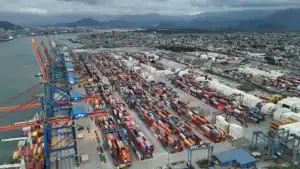
The shift matters for Brazil because the new framework includes broad product exemptions that the IEEPA tariffs did not. According to the ministry, about 46% of Brazilian exports to the U.S. ($17.5 billion based on 2025 figures) now carry no additional surcharge at all. Before the changes, roughly 22% of those exports faced tariffs of 40% or 50%.
Embraer’s Big Win
The most consequential exemption is for aircraft. Commercial planes, engines and aerospace parts are excluded from the Section 122 levy entirely, dropping Brazilian aircraft from a 10% tariff to zero. The ministry noted that aircraft were Brazil’s third-largest export to the U.S. in both 2024 and 2025, a high-value-added category dominated by Embraer. The planemaker had been at a competitive disadvantage because rivals such as Canada’s Bombardier and France’s Dassault already entered the American market duty-free.
Other Beneficiaries
Beyond aerospace, a range of industrial and agricultural sectors see their tariff burden drop sharply. Machinery, footwear, furniture, textiles, timber, chemicals and ornamental stone all move from tariffs as high as 50% to the uniform 10–15% global rate. In agriculture, seafood, honey, tobacco and soluble coffee make the same shift. The ministry said the uniform rate puts Brazilian goods on equal footing with competitors worldwide.
What Stays in Place
Not everything improved. About 29% of Brazilian exports ($10.9 billion) remain subject to Section 232 tariffs — national-security duties on steel, aluminum, copper and related products that were untouched by the Supreme Court ruling. These apply uniformly to most U.S. trading partners and carry rates of 10% to 50%. Separately, a Section 301 investigation into Brazil’s digital trade practices, launched in July 2025, remains active and could lead to additional targeted duties.
A Temporary Reprieve
The relief may be short-lived. Section 122 tariffs expire after 150 days unless Congress extends them, and the administration has already signaled it will use ongoing Section 232 and 301 investigations to build more durable tariff authority. Bilateral trade between Brazil and the U.S. totaled $82.8 billion in 2025, up 2.2% year-on-year, with Brazil running a $7.5 billion deficit — an unusual position for a country better known for large surpluses with its top partner, China. For Brazilian exporters, the new regime is less punitive than what came before. But with Washington’s tariff landscape shifting by the week, the ministry cautioned that all its estimates could still change.