

A global survey by financial services firm Remitly places Mexico among the world’s top 15 countries for entrepreneurial drive.
The study, which measured passion and perseverance, scored Mexico 40.19 out of 60, ranking 14th. South Africa, the United Kingdom, Ireland, India, and Spain led the list.
The figures reflect something well known inside Mexico: people are eager to start businesses. Yet official data shows that energy does not always translate into lasting companies.
Between May 2019 and May 2023, Mexico saw 1.7 million business openings but also 1.4 million closures, according to the national statistics institute INEGI. The net increase of 300,000 businesses highlights high activity but also high failure rates.
Behind this churn lie structural barriers. The national regulator CONAMER calculates that red tape costs the economy 3.22% of GDP.
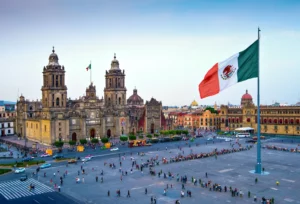
Municipalities add their own rules, and although the SARE program was designed to issue basic permits in three days, results vary widely by city. For many entrepreneurs, simply formalizing a business takes time and resources they cannot spare.
Money is another obstacle. Bank of Mexico figures show that micro, small, and medium firms together receive less than 30% of total bank lending.
At the start of 2024, about 40% of firms had bank credit, but only around 11% of small businesses secured new loans that quarter.
Development bank Nafin stepped in with guarantees and placed 558,952 million pesos in credit for small firms in 2024, but access remains limited.
The labor market compounds the challenge. INEGI reports that more than half of Mexico’s workforce, around 54–55%, remains in informal employment. Informality makes it harder to access finance, join social security, or register businesses formally.
The contrast is striking. Mexicans show determination and creativity, but red tape, scarce credit, and informality block much of this drive. The result is a country with strong entrepreneurial ambition but weak business survival.
The story behind the story is clear: Mexico does not lack people willing to take risks. It lacks the conditions that allow their efforts to endure.
Until financing becomes easier, rules simpler, and formality more attractive, much of the country’s entrepreneurial energy will remain potential rather than progress.