

With the FIFA World Cup three months away, Mexico City’s housing market is caught between two opposing forces: a city that needs to accommodate 5.5 million visiting football fans and one where tenants are already being displaced by rising rents and shrinking supply. A new report from the International Coalition for Habitat–Latin America (HIC-AL) puts numbers to the tension, and they are accelerating.
The Conversion Pipeline
Between December 2024 and June 2025, Mexico City gained a net 770 new Airbnb listings, bringing the total to 27,051. That translates to roughly three complete residential units exiting the long-term rental market every two days, according to HIC-AL’s analysis of Inside Airbnb data.
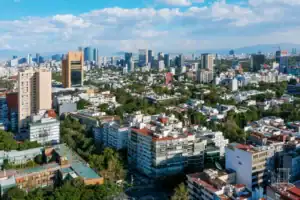
The conversions are concentrated in neighbourhoods already under pressure: Juárez, Roma, Condesa, and the Centro Histórico, where landlords are choosing not to renew residential leases in favour of short-stay tourist income. AMPI, Mexico’s national real estate association, reported that residential rental inquiries surged 155% over the past year, driven largely by World Cup anticipation. AMPI president Jenny Althair Rivas Padilla said rents in central areas have climbed 15 to 20%.
Hotel Prices Are Making It Worse
The pressure on short-term rentals is compounded by extreme hotel price inflation. AMVITUR, the tourism housing association, found that hotel rates in Mexico City for World Cup dates have risen an average of 961%, the steepest increase among all 16 host cities. At one Reforma hotel, nightly rates jumped from $157 to nearly $3,900.
Those prices push visitors toward Airbnb, which in turn pulls more residential units off the long-term market. Deloitte estimates 44,000 World Cup visitors will use short-term rentals in Mexico City alone, generating $87 million in direct economic impact. Airbnb itself is actively recruiting new hosts with a $750 incentive for listings in host cities.
A Law That Isn’t Working
Mexico City reformed its Tourism Law in 2023, capping Airbnb-style rentals at 180 nights per year to prevent residential units from becoming permanent tourist lodging. The HIC-AL report found widespread non-compliance: 7,532 properties, or 28% of all listings, are projected to exceed that cap in 2026.
The violations are not coming from small-time hosts. One in five offending operators controls half the listings exceeding the legal limit, pointing to a commercial operation running beneath the regulatory radar.
The Structural Gap
Federico Jiménez of 4S Real Estate identified the deeper problem: Mexico City does not build enough affordable housing. Regulatory barriers, financing constraints, and rising construction costs make units under 3 million pesos (~$150,000) increasingly difficult to deliver. Housing activists estimate more than 23,000 families have already been displaced from central neighbourhoods.
The World Cup will bring an estimated $327 million in economic spillover to Mexico’s three host cities. But for residents of Condesa, Roma, and Juárez watching their neighbours leave, the cost is being measured in something other than dollars.