

Key Points
- AI is spreading fast, but connectivity gaps and rule uncertainty still decide who scales.
- The standout products fix basic frictions: credit access, water stress, delivery costs, and clinic bottlenecks.
- With far less funding than global leaders, the region is winning by shipping practical tools, not grand promises.
(Analysis) Latin America rarely gets cast as an AI producer. It is usually framed as a market that imports technology. That is why the current wave matters. Many of these companies are not copying the “latest model” race.
They are building AI around problems that never go away here: informal incomes, weak service delivery, and cities where logistics can decide whether a business survives.
A widely cited snapshot put AI adoption in the region at 40% in 2024, after an 18-point jump in a year. The number itself is less important than what it implies: AI is shifting from novelty to routine, even in places where the basics are still uneven.
Mexico: Credit, Small Business, And WhatsApp-First Finance
Fintech is the clearest window into how this works. Many adults remain unbanked or underbanked. Credit histories are thin. Paperwork is heavy. Incumbents move slowly. So startups have aimed AI at risk scoring, fraud detection, and customer support in chat.
Mexico’s Kapital has positioned itself as an AI-driven platform for small and mid-sized firms and reported a $100 million Series C that pushed valuation above $1 billion.
The German report also described Mexico’s Aiflow using drone imagery and predictive analytics to flag disease and irrigation problems early, when losses can still be avoided.
It also highlighted Morada.ai as growing 400% per year with an AI real-estate assistant targeting markets beyond the region.

Brazil: Banking In Chats, Faster Triage, And An Energy Edge
Brazil’s Magie went where people already are: WhatsApp. It has reported $16.5 million in processed transactions. In January 2026, coverage described a $5 million round led by Lux Capital as it shifted toward business users.
One backer, Canary, has publicly said Magie passed 400,000 users and processed more than R$2 billion ($370 million). The deeper story is distribution. The “bank branch” is being replaced by a chat thread.
In healthcare, Brazil’s Alice has been described as using AI triage to shorten a digital care journey from 30 minutes to 25.
On infrastructure, Brazil stands out because its power mix is unusually renewable-heavy, often described around the mid-80% range and, in some estimates, closer to nine-tenths in recent years.
Brazil has also shown it will intervene when AI-related data practices collide with privacy standards, including action involving Meta.
Argentina: Water-Saving AI And Enterprise Software Exports
Agriculture is where Latin American AI becomes globally relevant. When water becomes the constraint, AI stops being a gadget.
Argentina-founded Kilimo says its irrigation guidance can cut water use by up to 20% while keeping yields stable. A widely repeated headline figure credits its programs with saving 72 billion liters of water in 2022.
The German report also pointed to Argentina’s InvGate, cited as receiving Gartner recognition in IT management. The export story here is not only consumer apps. It is enterprise software that competes outside the region.
Chile: Santiago’s Operations Stack And A Regional Language Push
Chile’s ecosystem is smaller, but it is building exportable operations tools. SimpliRoute applies machine learning to route optimization, adjusting to real-world constraints.
Fracttal markets predictive maintenance aimed at reducing unplanned downtime, and the German report cited multinational customers and a 30% reduction claim.
Another Chile-linked name in the German report, Kudan.ai, was described as analyzing city-camera feeds locally, keeping data at the edge instead of sending it all to the cloud.
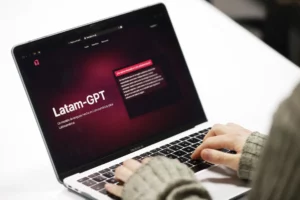
Chile also anchors the region’s push for language-first AI infrastructure. Latam-GPT, led by Chile’s CENIA with partners across the region, has been described as aiming for an open 50-billion-parameter model tuned to Spanish and Portuguese.
Uruguay: A Regional Assistant Built For Everyday Messaging
Zapia, founded in Uruguay with a regional focus, has been reported to raise more than $12 million in seed funding for a WhatsApp-based assistant. The signal is not novelty. It is behavior change: assistants that live inside the messaging rails people already trust.
Colombia: Cybersecurity As AI Infrastructure
Colombia’s Lumu has been reported to raise a $30 million Series B in cybersecurity. In a region where fraud, compromise, and operational disruption are daily risks, security products often scale faster than consumer experiments.

Regional Layer: New Sales Tools, Culture Fit, And The Export Thesis
Chile’s diio has been reported to raise a $2.5 million seed for an AI-native sales assistant. The German report emphasized a competitive edge outsiders often miss: building tools in Spanish, Portuguese, and even indigenous languages.
When AI speaks like people do, adoption stops feeling like forced modernization. One survey datapoint cited in the German report put trust in AI among Brazilians at 84%, above global averages.
The German report pointed to Chilean food-tech unicorn NotCo, describing AI-designed plant-based products sold in U.S. Walmart stores. These examples matter because they show an export path: local needs first, then international scale.
The Constraints: Internet, Compute, And Rules
Household internet access was about 67.3% in 2022, well below OECD levels. Rural connectivity is far worse, often summarized as roughly four in ten rural residents connected versus about seven in ten in cities. Compute and cloud capacity are uneven, and energy can become a bottleneck.
Rules are another constraint. Only 17% of companies report clear AI governance frameworks. Countries are moving at different speeds, creating a patchwork that raises compliance costs and uncertainty.
The Money Gap And The 2030 Question
One comparison put 2024 AI investment at $8.2 billion in Latin America versus $190 billion globally. That gap limits waste and forces discipline.
Some analysts argue the bigger upside is exports of knowledge-based services that could reach $100 billion over the next decade if infrastructure and governance improve.
The German report’s forward-looking estimate was more modest: generative AI could add about $1.8 billion per year by 2030, depending on investment, education, and access.
The story behind the story is that this wave is being pulled by practical demand more than slogans.
It is being built by firms that assume services will be slow, data will be messy, and users will not tolerate friction.
That is not a glamorous origin. It may be exactly why these tools are starting to travel.