

Two hundred Israeli fighter jets and American B-2 stealth bombers struck Iran simultaneously on February 28, hitting two separate gatherings of senior regime officials in Tehran. Israel said 40 commanders were eliminated “in one minute.” By the time Iranian state media confirmed Ayatollah Ali Khamenei’s death hours later, the 36-year-old Islamic Republic had already lost its defense minister, its armed forces chief of staff, its Revolutionary Guard commander, the head of intelligence, and Khamenei’s own daughter and grandchild.
President Trump said 48 Iranian leaders were killed. “Nobody can believe the success we’re having — 48 leaders are gone in one shot,” he told Fox News. Nine Iranian naval ships were sunk and the navy’s headquarters “largely destroyed.” The Pentagon confirmed B-2 bombers dropped 2,000-pound munitions on hardened ballistic missile facilities overnight — underground bunkers Iran calls “missile cities.”
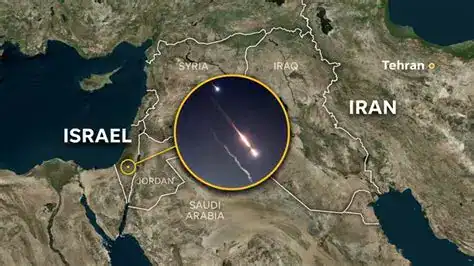
Iran Strikes Back — Everywhere
Tehran’s retaliation was the broadest in its history. The Revolutionary Guard launched what it called “Truthful Promise 4,” firing hundreds of ballistic missiles and drones not just at Israel but across the Gulf. US Central Command published the target list: Dubai International Airport, Kuwait International Airport, the Burj Al Arab and Fairmont Palm hotels in Dubai, the Haifa oil refinery, and residential areas in Israel, Bahrain, and Qatar.
The UAE intercepted 152 of 165 incoming ballistic missiles and 195 of 209 drones, though debris killed three people. Kuwait repelled strikes aimed at the Ali Al-Salem Air Base. Qatar reported 16 wounded. In Israel, six people were killed in a strike on central Israel and the rescue service treated more than 100 casualties on day one. Three US service members were killed in action and five seriously wounded.
Inside Iran, the toll was staggering. State media cited Red Crescent figures of at least 201 dead and 747 injured across 24 provinces. A Washington-based human rights group estimated at least 133 civilian deaths as a minimum. Iranian state media reported that 40 students at an all-girls school in the southern city of Minab were killed.
Hormuz Choked, Skies Closed
The economic fallout could outlast the fighting. The IRGC declared the Strait of Hormuz — through which more than 20 percent of the world’s oil transits — “effectively closed.” At least two tankers and an Omani port were attacked, and ships began stacking in the Arabian Sea. Crude prices are expected to spike sharply when trading resumes Monday.
Airspace closures grounded more than 1,800 flights. Dubai, Abu Dhabi, and Doha — hubs that together handle roughly 90,000 passengers daily — shut down entirely. At least 145 aircraft were diverted, stranding travelers across Europe, Asia, and the Gulf. The State Department authorized departure of non-emergency staff from Qatar and told Americans across the region to shelter in place.
Power Vacuum and Global Reaction
A temporary leadership council has taken over in Tehran. Veteran politician Ali Larijani, secretary of Iran’s Supreme National Security Council and a former nuclear negotiator known for pragmatism, announced the interim body. Foreign Minister Abbas Araghchi insisted Iran’s military remains “capable enough to defend our country” and said Tehran is open to de-escalation — but only after the aggression stops.
Trump was unequivocal. Strikes would continue “throughout the week or, as long as necessary,” he wrote, urging Iran’s security forces to surrender or face “certain death.” Netanyahu told Iranians in Persian to “complete this work.” Exiled crown prince Reza Pahlavi called it “the game changer we’ve been waiting for.” Inside Iran, videos showed civilians celebrating — and regime supporters mourning in the streets.
Democrats demanded a War Powers vote. The UN Security Council met in emergency session. The IAEA board convenes Monday. NATO said it was monitoring. Russia called the strikes “unprovoked aggression.” Turkey denied the US use of its airspace. Britain said it had planes overhead for “regional defensive operations.”
And at the FBI, Director Kash Patel put counterterrorism teams on 24/7 alert — a quiet acknowledgment that the consequences of the most dramatic 48 hours in the Middle East since 1979 are only beginning to be felt at home.