

Key Points
When José Antonio Kast takes office on March 11, he will bring his faith into La Moneda in a way no recent Chilean president has. Among the appointments he has finalized is one that carries no ministerial portfolio but says a great deal about the man who won with 58% of the vote: a personal chaplain for the presidential palace.
The Priest
The chosen chaplain is Father Mariano Irureta, a 71-year-old member of the Schoenstatt movement — the same Catholic organization to which Kast, his wife Pía Adriasola, and their nine children have belonged for decades. Irureta was ordained in 1985 at the Bellavista Sanctuary, one of Schoenstatt’s main centers in Chile. He has served as rector of a Schoenstatt seminary, provincial superior of the congregation, and since 2015 as national director of the movement in Chile.
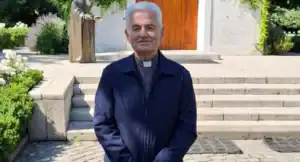
He comes from a political family. His father, Narciso Irureta, was a congressman and senator for the Christian Democrats and later served as transport minister in the 1990s. Before entering the seminary, the younger Irureta studied law at the Pontifical Catholic University of Chile.
What a Presidential Chaplain Does
The role is not a cabinet position. A presidential chaplain provides spiritual counsel to those working in the executive branch and may organize religious ceremonies in official settings. The figure is not unprecedented in Chile. Both chambers of the U.S. Congress have had official chaplains since the 18th century. Military chaplains are standard across Latin America and Europe.
But context shapes the meaning. Kast is the most openly Catholic president Chile has elected in modern memory. He has said publicly that he considers himself a Catholic first and a politician second. His victory speech in December included a prayer for wisdom and strength. The Schoenstatt movement, founded in Germany in 1914, emphasizes spiritual renewal through devotion to the Virgin Mary.
Faith in a Secular State
Chile separated church and state in 1925. Seven Catholic holy days remain national holidays, but the country has undergone one of Latin America’s sharpest secularization trends. A 2023 AmericasBarometer survey found that nearly 40% of Chileans are religiously unaffiliated, making it the second least religious country in the region after Uruguay. Catholic identification has declined steadily, accelerated by abuse scandals that devastated the church’s credibility.
For Kast’s supporters, the chaplaincy is a natural expression of a leader who has never hidden his convictions. For critics, it raises questions about where personal piety ends and public signaling begins in a constitutionally secular republic. Kast campaigned on restoring what he called the values that built Chile: God, family, and homeland.
The appointment carries no legal weight and costs the state nothing. But in a country where nearly half the population has walked away from organized religion, installing a priest from your own spiritual movement inside the seat of government is not a neutral act. It is a statement — and Kast has never been shy about making those.