

(Analysis) Prime Minister Shigeru Ishiba used the 2025 Tokyo International Conference on African Development in Yokohama to announce Japan’s most ambitious Africa strategy yet.
He unveiled the Indian Ocean–Africa Economic Zone, a framework to link Africa with India and the Middle East through trade, infrastructure, and industrial cooperation.
Ishiba called it a “free and fair economic zone,” extending the Free and Open Indo-Pacific vision first introduced by the late Shinzo Abe in 2016.
Japan’s plan offers up to $5.5 billion in loans through the African Development Bank and includes training for 30,000 artificial intelligence specialists and 300,000 workers in other fields.
The government will use its revised “offer-type” aid model, allowing Tokyo to propose projects that align with African priorities but also serve Japan’s strategic needs.
The Nacala Corridor and Africa’s Strategic Weight
One focus is the Nacala Corridor in southern Africa. Since 2012, Japan has invested in this logistics route connecting Zambia’s copper belt through Malawi to Mozambique’s Indian Ocean port.
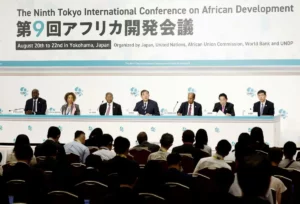
A Japanese-financed expansion of Nacala Port, completed in 2023, lifted cargo volumes to 3.1 million tons. Ishiba confirmed new investments in highways, rail, and water projects to strengthen the corridor.
For Zambia, Nacala cuts the distance to the sea by about 500 kilometers compared to Durban, reducing high transport costs that often exceed half of export prices.
The logic is clear. Africa has 1.4 billion people today and will reach 2.5 billion by 2050, according to UN projections. That means one quarter of the world’s population and the largest share of the global workforce.
The continent also holds vital resources. The Democratic Republic of Congo produces nearly 70 percent of global cobalt, Zambia is a leading copper supplier, and countries from Zimbabwe to Namibia hold lithium and rare earth reserves.
These materials are essential for electric vehicles, batteries, and renewable energy. Japan, which relies heavily on imports, wants to diversify away from China’s dominant role in these markets.
Competing Powers and Different Playbooks
Japan is not entering an empty field. Africa has long been the target of outside players. China has built ports, railways, and power plants through the Belt and Road Initiative, though its lending has raised debt concerns.
The United Arab Emirates uses Dubai as a transshipment hub for African trade and channels state investment funds into ports, logistics, and renewable energy.
Turkey combines construction projects, cultural ties, and rising defense exports, including drones, to build partnerships in North, West, and East Africa. Each of these actors has pursued Africa with energy for more than a decade.
Europe and the United States are also in the race, but with mixed results. Europe promotes its Global Gateway program to rival China’s Belt and Road, yet African governments often view it with suspicion because of Europe’s colonial past.
Memories of exploitation and atrocities linger, making African leaders cautious about European promises. The United States has launched programs such as Prosper Africa and the Partnership for Global Infrastructure, but under Donald Trump the emphasis shifted to tariffs and reduced aid.
Washington’s new approach focuses on security cooperation and private investment, but its impact remains limited compared to China’s vast funding or the Gulf’s aggressive expansion.
Japan’s Late but Calculated Entry
Japan’s approach differs. It emphasizes durable infrastructure, skills transfer, and African ownership rather than fast deals or military exports.
Ishiba stressed “co-creation,” pointing to partnerships where Japanese firms team up with Indian companies to supply African markets while training local workers.
By connecting Africa to Indian and Middle Eastern logistics hubs, Tokyo aims to build triangular trade routes that support both its supply needs and African industrialization.
The reason Japan is stepping in now lies at home. With a shrinking, aging population and few natural resources, Japan needs both secure supply chains and new markets.
Africa’s growing consumer base and critical mineral reserves fit both requirements. Ishiba’s plan marks an effort to lock in long-term access while presenting Japan as a partner that listens and delivers quality projects.
The real story is that Japan is late to a crowded race, but it is betting that its reputation for quality, transparency, and long-term planning can win it space in Africa’s economic future.
Whether it can scale its efforts fast enough to match China’s reach, the Gulf’s money, Europe’s legacy programs, or America’s security-driven investments will decide how much influence Tokyo gains on a continent that is becoming central to global trade and security.