

Key Points
- A cost-of-living shock, a collapsing rial, and disputed price controls are driving protests beyond big cities into provinces and market towns.
- Rights monitors report at least dozens killed and more than 2,200 detained, while officials acknowledge security-force casualties and violence in several areas.
- The state’s restraint so far—no blanket internet shutdown, no mass street deployment—could change quickly if strikes deepen or protests synchronize.
Iran’s latest wave of unrest is no longer a localized outburst. What began as anger over household budgets has spread across provinces.
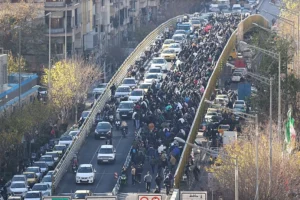
Activists report dozens of separate demonstrations in a single day, along with shop closures in parts of the country that traditionally signal serious economic distress.
At the center is a basic breakdown: salaries and savings are being erased by the rial’s plunge. By late December, the open-market rate was hovering around 1.46–1.47 million rials to $1, a record that turned routine purchases into daily negotiations.
The timing also intersects with policy shifts that reduced preferential exchange rates for some imports and replaced them with small cash transfers—changes that can quickly raise the sticker price of staples and fuel public suspicion that insiders are protected while ordinary consumers absorb the hit.
Monitors tracking the unrest say the violence linked to protests has left roughly four dozen people dead and well over 2,200 detained, though tallies differ by day and by counting method.
Iran protests rise amid economic pressure
Iranian outlets and state-linked agencies have also reported security-force casualties, including a police colonel fatally wounded near Tehran and shootings in Lordegan that left two security members dead and dozens injured.
Unlike the 2022 demonstrations after Mahsa Amini’s death in custody, the state has not imposed a sweeping internet blackout or visibly flooded streets nationwide—at least not yet. Localized disruptions and arrests have been reported, but daily life in Tehran has continued in many districts.
President Masoud Pezeshkian, facing the economic fallout, has warned suppliers against hoarding and overpricing while promising tighter monitoring of essential goods. The movement remains largely leaderless inside the country, but outside voices are testing their influence.
Exiled crown prince Reza Pahlavi called for coordinated rooftop and street chants at 8 p.m. on January 8 and 9 as a measure of public readiness; reports suggested participation in parts of Tehran, though its scale is unclear.
International pressure is rising, too. U.S. President Donald Trump warned Tehran against violently killing peaceful protesters, while Iran’s foreign ministry denounced Washington’s comments as interference.
For Iranians, the immediate question is whether economic pain produces sustained coordination—or prompts the kind of forceful response that has crushed past uprisings in 2009 and 2019.