

Key Points
Twenty-five years of negotiation, one month of legal limbo, and now a political decision that skips the usual step. The European Commission announced Friday that it will provisionally apply the EU-Mercosur trade agreement, beginning to reduce tariffs and open markets before the European Parliament has given its consent. It is one of the most consequential trade moves Brussels has made in years — and one of the most contested.
What Happened
Commission President Ursula von der Leyen made the announcement after Argentina and Uruguay became the first countries to ratify the deal this week. Uruguay’s chamber approved the agreement 91-2 on Wednesday, and Argentina’s lower house followed on Thursday. Brazil and Paraguay are expected to complete their processes in the coming weeks.
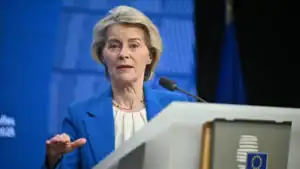
The legal mechanism is straightforward. When EU member states authorized the signing of the deal in January, they also granted the Commission the power to provisionally apply it once at least one Mercosur country completed ratification. Von der Leyen invoked that authority Friday, saying the decision followed intensive discussions with national capitals and senior lawmakers.
Why It Matters
The deal eliminates tariffs on more than 90% of trade between the EU’s 27 members and the four founding Mercosur countries. Together, the two blocs account for roughly 30% of global GDP and more than 700 million consumers. The Commission estimates it could save European exporters €4 billion ($4.7 billion) annually in duties, covering sectors from automobiles and machinery to wine and pharmaceuticals. South American exporters gain broader access to the EU market for beef, sugar, rice, honey and soy, with the Mercosur bloc permitted to sell 99,000 tonnes of beef annually at reduced tariff rates.
Bypassing Parliament
The Commission’s move effectively circumvents a European Parliament vote on January 21 that referred the agreement to the EU Court of Justice for a compatibility review — a process that could take up to two years. That vote, which passed 334 to 324, was driven by French-led opposition from farming lobbies and lawmakers concerned about competition from cheaper South American agricultural imports.
France’s agriculture minister, Annie Genevard, called the provisional application “very prejudicial” to the bloc’s institutional functioning. Paris had warned last month that the move would constitute a “democratic violation.” The Irish Farmers’ Association said the decision failed to respect the parliamentary vote. Von der Leyen acknowledged the limits, stressing that the agreement “can only be fully concluded once the European Parliament has given its consent.”
The geopolitical backdrop explains the urgency. With U.S. tariffs reshaping global trade and China competing aggressively for Latin American markets, the Commission views the deal as a hedge against isolation. Von der Leyen framed it as giving Europe a “strategic first-mover advantage.” Whether it also sets a precedent for overriding parliamentary objections on trade is a question Brussels will have to answer long after the tariffs start falling.