

Over 235,000 Ethiopians fled their country in 2023, with 90% targeting Saudi Arabia through the lethal “Eastern Route” spanning Djibouti, Yemen, and Saudi borders, according to the International Organization for Migration (IOM).
This exodus stems from economic collapse: youth unemployment exceeds 30% in regions like Oromia and Amhara, while annual inflation hit 28% in 2023, eroding wages and farmland productivity.
Remittances from Saudi Arabia, where 750,000 Ethiopians work, now total $3 billion annually—a lifeline for families grappling with rising food prices and drought.
Political instability amplifies desperation. The Tigray war (2020–2022) displaced 4 million people, while ongoing clashes in Amhara and Oromia—the primary migrant-sending regions—destroy infrastructure and livelihoods.
Families often sell livestock or land to pay smugglers $2,000–$3,000 for the journey, despite knowing the risks. A 2023 World Bank survey found 62% of households in these areas rely on migration income to survive.
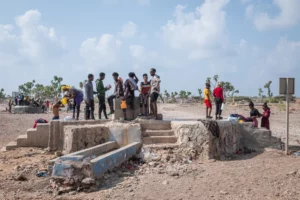
The journey’s dangers are systematic. Migrants first cross Djibouti’s “Triangle of Death,” where temperatures reach 50°C (122°F) and armed groups extort travelers. At least 33 Ethiopians died of thirst there in April 2024 alone.
Next, overcrowded boats ferry groups across the Red Sea, where 462 migrants drowned in 2024 shipwrecks, including 33 in a single April capsizing.
Those reaching Yemen face Houthi checkpoints before confronting Saudi border guards, who Human Rights Watch accuses of using machine guns and explosives against migrants. Survivors describe night crossings littered with corpses “stacked like firewood.”
Saudi Labor Contradictions Deepen Ethiopian Migrant Crisis
Saudi Arabia’s contradictory policies intensify the crisis. While 60% of Ethiopian migrants fill agricultural and domestic jobs Saudis avoid, the kingdom detains over 30,000 Ethiopians in overcrowded prisons.
Amnesty International documents cases of beatings, denied medical care, and deaths in custody. Despite reforming its kafala labor system in 2021, Saudi Arabia excludes domestic and agricultural workers—sectors employing 450,000 undocumented Ethiopians vulnerable to wage theft and abuse.
Regional repercussions grow as Somalis and Eritreans increasingly join the route. Gulf investments in Horn of Africa ports, like Dubai’s Doraleh Container Terminal in Djibouti, inadvertently enable smuggling networks to blend with legitimate trade.
The UN warns this migration pipeline could destabilize East Africa, yet returnees face bleak prospects: 80% gain no skills abroad, perpetuating cycles of departure. For Ethiopia’s youth, the calculus remains grim—risk death en route or watch their families starve.