

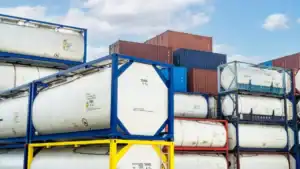
A wholesale food distributor in Havana recently took delivery of something no Cuban private citizen has legally imported in nearly seven decades: a 24,000-liter isotank of diesel, shipped from the United States and unloaded at the port of Mariel. The shipment is already in use, and a second is being arranged.
Cuban consultant Oniel Díaz confirmed that at least two clients have completed similar imports. By late February, two or three small and medium-sized enterprises were fueling their fleets at CIMEX gas stations with privately imported diesel.
Breaking a 70-Year Monopoly
The Cuban government authorized private fuel imports in early February, announced by Deputy Prime Minister Óscar Pérez-Oliva Fraga on state television as part of emergency measures. The decision ended an unbroken state monopoly on fuel distribution dating to the early years of the revolution. Pérez-Oliva had signaled the change as early as November 2025, but the formal authorization came only after the crisis reached existential proportions.
How It Works — and What It Costs
The process is legal but tightly controlled. Purchases must be routed through state importers such as Quimimport or Maprinter. Once fuel arrives, it is nationalized through state oil company CUPET before delivery — either at an assigned CIMEX station or at a privately built storage depot that takes four to eight months to certify.
The imports operate under licenses from the U.S. Office of Foreign Assets Control (OFAC), which allows Cuban private businesses to purchase certain products including fuel. Entrepreneurs are also exploring sources in neighboring countries and Europe. Authorities have set no volume limits, though resale to third parties is prohibited.
Prohibitive Costs
The economics are stark. An isotank costs roughly $20,000, with $25,000 to $30,000 to fill it and around $5,000 for shipping — putting the minimum per-shipment cost above $50,000. A private storage facility can add $50,000 more. According to consulting firm Auge, 96.4% of Cuba‘s 9,236 registered SMEs are severely affected by the energy shortage, and most lack the capital to participate.
Crisis Behind the Opening
The concession reflects the depth of Cuba’s energy emergency. After U.S. forces abducted Venezuelan President Nicolás Maduro in January and seized Venezuelan oil tankers, Cuba lost its largest fuel supplier. Trump then signed an executive order on January 29 threatening tariffs on any country that sells oil to the island. Mexico, which had supplied roughly 44% of Cuba’s imports, halted shipments under pressure.
Cuba has lost an estimated 90% of its fuel supply. Diesel sales are suspended, gasoline is severely rationed, and the national power deficit approaches 1,800 megawatts daily. Blackouts of up to 20 hours affect provinces outside Havana, and Bloomberg satellite analysis found nighttime light levels in eastern cities dropped as much as 50%.
On February 25, the U.S. Treasury issued a license allowing companies to resell Venezuelan oil to Cuba’s private sector — a limited concession that critics say falls far short of the need. The few businesses that can afford to import are beginning to build informal redistribution networks, with some planning province-wide supply chains certified by CUPET. The state monopoly has cracked. Whether the crack widens depends on how long Cuba’s economy can hold.