Colombia Gas Production Falls to Record Low, Venezuela Fix Nearest
Key Facts
— — Colombia’s commercial gas production fell to 695 million cubic feet per day (MPCD) in February 2026—the lowest February reading on record and a 15.7% year-on-year decline following a 17.1% full-year drop in 2025. Imports through the SPEC regasification terminal in Cartagena have surged from less than 3% of total supply (2015-2023) to more than 23% in Q1 2026.
— — Corficolombiana projects the supply deficit will reach 20% in 2026, rising to 41% by 2028 and 57% by 2030 without new domestic production. The offshore Sirius project (Ecopetrol-Petrobras, 400-500 MPCD capacity) is the only field that can structurally close the gap, but it faces 122 prior-consultation processes and will not produce before 2029-2030 at the earliest.
— — The fastest near-term fix is Venezuelan gas via the Gasoducto Antonio Ricaurte connecting Maracaibo to La Guajira, which requires only a 5-kilometer pipeline repair on the Colombian side and an OFAC license that Ecopetrol and Grupo ISA are actively negotiating with Washington. PDVSA has already moved the necessary piping to the Paragachón border crossing.
— Deep Dive
— For the complete picture, read our in-depth guide: Colombia Economy 2026: Petro Reforms, Coffee, Oil and Growth
Colombia lost gas self-sufficiency in December 2024. Sixteen months later, it is debating whether to fix the problem by importing more LNG at global prices, by piping gas from a post-Maduro Venezuela that needs an OFAC waiver, or by waiting for an offshore field that won’t produce for four years. The answer is probably all three, and it may still not be enough.
The Colombia gas crisis documented by Corficolombiana this week is the most detailed quantification yet of a structural energy deficit that has been building since the country’s three dominant mature fields—Cusiana, Clarinete, and Cupiagua—entered irreversible decline. The Rio Times, the Latin American financial news outlet, reports that these three fields alone account for a disproportionate share of the 80% of national production concentrated in just 12 fields, and their decline is the mechanical driver of the 695 MPCD February reading that represents the lowest output for any February since records began.
The Price Shock Is Already Happening
The shift from domestic to imported gas is not a theoretical exercise—it has already reshaped Colombian energy costs. Industrial gas prices rose 69% year-on-year in 2025; residential gas prices increased 23%. The driver is straightforward: imported LNG carries layered costs for liquefaction, maritime transport, and regasification that add between 5% and 15% above the origin price, depending on market conditions and logistics.
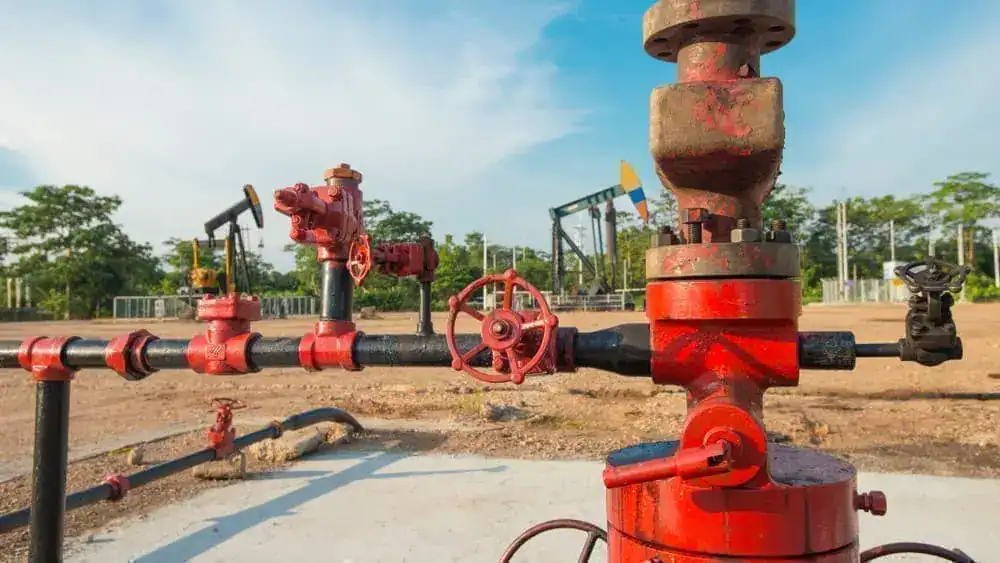
Colombia currently depends on a single regasification terminal—the SPEC facility in Cartagena, which was originally designed as backup for thermal power generation, not as a structural supply source. Its current capacity of 465 MPCD is being expanded to 533 MPCD by 2027. A second terminal at Puerto Bahía (Ecopetrol and Frontera Energy, 126 MPCD) is expected to enter service in Q3 2026, and a Pacific coast terminal in Buenaventura (PIO SAS, 60 MPCD) is under development, but both face regulatory and infrastructure timelines that leave the country vulnerable to any demand surge.
Sirius: The Long-Term Answer That Is Not Near-Term
The offshore Sirius field, a joint Ecopetrol-Petrobras discovery in the Caribbean, is the only project with the scale to structurally close the gap: initial production capacity of 400-500 MPCD would represent more than 50% of current domestic commercialized output. But Sirius faces 122 prior-consultation processes with affected communities, full environmental licensing, the development of offshore infrastructure, and connection to the national transport system. Even under an optimistic scenario, production would begin no earlier than 2029-2030.
Meanwhile, Corficolombiana warns that a potential El Niño event in the second half of 2026 would push thermal power demand well beyond the additional import capacity coming online this year, “more than doubling the additional capacity of 2026 and absorbing nearly 90% of the supply expected for 2027.” The deficit trajectory without new domestic supply is severe: 20% in 2026, 24% in 2027, 41% in 2028, 56% in 2029, and 57% in 2030.
The Venezuela Option
The fastest supply fix involves a country Colombia is simultaneously imposing tariffs on and withdrawing ambassadors from: Venezuela, whose post-Maduro government under Delcy Rodríguez is aggressively opening its energy sector to foreign investment. The Gasoducto Antonio Ricaurte, which connects the Maracaibo basin to Colombia’s La Guajira department, needs only a 5-kilometer pipeline repair on the Colombian side—a 3-to-4-month job—or a temporary flexible connection achievable in 1-to-2 months. PDVSA has already moved the necessary piping to the Paragachón border zone.
The bottleneck is regulatory, not physical: Ecopetrol’s acting president Juan Carlos Hurtado confirmed the company is seeking an OFAC license to enable binational energy projects with Venezuela, and Mines Minister Edwin Palma led a March meeting with US officials to discuss the rehabilitation of the La Guajira electrical interconnection and gas imports. The irony is Colombian-grade: the country that is fighting a trade war with one neighbor over 100% tariffs and battling its own central bank over rates may need to ask a third neighbor—via a US sanctions waiver—for the gas that keeps its lights on and its factories running.
Related Coverage: Venezuela’s Delcy Pivot: 100 Days of Reform • Colombia-Ecuador Trade War • Colombia $4B Bond Buyback
More: Colombia news in English, every day from The Rio Times.
This article was produced by The Rio Times’ automated newsroom system. How we use AI · Report an error · Editorial responsibility: Matthias Camenzind, Editor-in-Chief