

Key Points
- All three major Canadian airlines — Air Canada, WestJet and Air Transat — suspended Cuba flights after Havana warned jet fuel would be unavailable from February 10 until at least March 11.
- Canada accounts for roughly half of all foreign tourists in Cuba; the repatriation of up to 21,000 Canadians currently on the island amounts to an immediate tourism shutdown.
- Spain’s Meliá and Iberostar, which manage 34 and 20 Cuban hotels respectively, face their worst operational crisis on the island as occupancy plunges and three Meliá properties have temporarily closed.
On a normal February morning at José Martí International Airport in Havana, the arrivals hall would be filling with Canadian families chasing sun and cheap all-inclusive deals. Instead, this week the terminal resembles an evacuation zone.
Air Canada, the country’s largest carrier, is dispatching empty planes southbound to retrieve some 3,000 stranded passengers — part of a broader repatriation effort that industry sources say could involve up to 21,000 Canadians still on the island.
The trigger was a notice Cuban aviation authorities issued on Sunday night: jet fuel will not be commercially available at nine airports across the island from Tuesday until at least March 11.
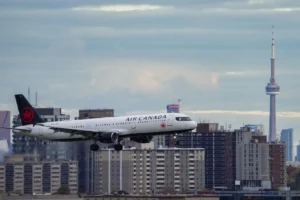
Within hours, all three major Canadian carriers — Air Canada, WestJet and Air Transat — had cancelled or suspended their Cuba services.
“It is projected that as of Feb. 10 aviation fuel will not be commercially available at the island’s airports,” Air Canada said in a statement, announcing suspensions through at least May 1.
The fuel drought is the sharpest consequence yet of Washington’s tightening grip on Cuba’s energy supply. Since U.S. forces deposed Venezuelan President Nicolás Maduro on January 3, no oil has left Venezuelan ports for Cuba — severing what had been the island’s single largest petroleum lifeline.
Trump then signed an executive order threatening tariffs on any nation that sells oil to Cuba, prompting Mexico, another key supplier, to quietly suspend its own shipments.
By late January, energy analysts estimated Cuba had fuel reserves for just 15 to 20 days. That countdown has now expired.
For Cuba’s tourism industry, the Canadian withdrawal is existential. Canada was the source of 754,000 visitors in 2025 — roughly 42 percent of all international arrivals — and during peak winter season that share climbs above 50 percent.
“It is more than half of the tourism on the island right now. It is a total catastrophe,” one industry source told Spain’s El País.
The timing could not be worse: Cuba’s tourism numbers have been in freefall since peaking at five million visitors in 2018, collapsing to just 1.8 million last year, a 64 percent drop in seven years.
Fuel crisis cripples Cuba tourism sector
Spanish airlines scrambled to keep their routes alive. Iberia and Air Europa announced technical stops in Santo Domingo, Dominican Republic, to refuel on their Havana-Madrid legs, while Iberia also offered affected customers the option of rebooking, accepting a voucher, or receiving a full refund.
W2Fly, the airline linked to the Iberostar group, followed suit on Tuesday. European carriers are absorbing the additional costs, but they are flying into a destination where the hotels themselves are struggling to stay open.
That is the uncomfortable reality confronting Meliá Hotels International and Iberostar, the two Mallorca-based chains with the deepest footprint in Cuba.
Meliá manages 34 properties on the island — 15 percent of its global room inventory — and three have been temporarily shuttered due to collapsing occupancy.
The company calls it “compaction,” an optimization measure, but the numbers tell a harsher story. In the first nine months of 2025, Meliá’s Cuban operations posted a 40.2 percent occupancy rate against a group-wide average of 62.3 percent.
Revenue per available room — the industry’s key profitability gauge — came in at €30.60, barely a third of the company’s global average of €91.70, and falling at a rate of nearly 7 percent year-on-year.
Iberostar, with 20 Cuban hotels (18 according to some counts), faces similar headwinds. Several of its properties — including the Iberostar Origin Playa Pilar in Cayo Coco and the Iberostar Origin Daiquirí — are among the resorts that have temporarily closed, with guests being shuffled to higher-occupancy hotels.
The Cuban government has described the policy as “streamlining,” part of an emergency plan that also includes reduced hours for hospitals, banks and government offices as the energy crisis deepens.
Yet both companies insist they are staying. Meliá said in its latest earnings report that it had built its own supply chain to improve provisioning and was gaining market share even as the pie shrank.
The company also noted that Cuban authorities had guaranteed fuel supplies for its remaining open hotels.
Iberostar has been even more restrained in its public comments, though its parent group’s airline arm, W2Fly, continuing flights signals a strategic bet that the crisis is survivable.
The geopolitical backdrop makes that bet precarious. Trump has publicly stated he wants the Cuban government to “make a deal before it is too late,” while Secretary of State Marco Rubio has openly wished for the end of Communist rule on the island.
Unconfirmed reports suggest secret talks between the CIA and Alejandro Castro Espín, Raúl Castro’s son, though Cuban officials deny any negotiations are underway.
Meanwhile, the White House is reportedly considering a naval blockade — the first since the 1962 missile crisis — to bar any oil shipments from reaching Cuba.
For Meliá and Iberostar, the calculus is painfully familiar: their Cuban investments date back decades, anchored in relationships that long predate the current crisis. Walking away would mean writing off billions in infrastructure and management contracts.
Staying means operating hotels with intermittent electricity, dwindling food supplies, and an ever-shrinking pool of guests willing to fly to an island where the airport may not have fuel for the return trip.
Cuba’s tourism industry has survived Soviet collapse, American embargo and a global pandemic. Whether it can survive being cut off from oil entirely is the question that neither Havana nor its Spanish hotel partners have an answer to yet.