

Vivara Q4 2025 Earnings: What Happened
Vivara Participações S.A. (VIVA3) is Latin America’s largest jewelry retailer, founded over 60 years ago and operating through two main brands — Vivara (premium gold and precious stones) and Life by Vivara (accessible silver and fashion jewelry targeting younger consumers). The company runs a vertically integrated model spanning design, manufacturing (including a Manaus free-trade-zone facility for tax optimization), and a retail network of approximately 480 points of sale across Brazil plus one international store in Panama. Vivara Q4 2025 earnings are covered by The Rio Times as part of its Latin American financial news reporting on B3-listed consumer companies.
The Q4 result presents a split narrative. Bottom-line adjusted profit grew an impressive 28.5% to R$264.8 million ($51M), but this was propelled by a favorable tax rate due to JCP distributions — not by operating improvement. The adjusted EBITDA actually declined 4.8% to R$286.1 million ($55M), and the EBITDA margin shrank by 6.0 percentage points to 26.9%, the most significant quarterly margin compression in over two years. Gross profit of R$716 million ($137M) grew 5.5% with a 67.3% margin that remains best-in-class for Brazilian retail, but the gap between gross and operating margins widened dramatically as selling expenses surged 22.9%.
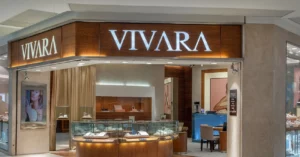
Shares of VIVA3 traded around R$24.58, up approximately 42.5% over the past 12 months, with an estimated P/E of around 9.1x, ROE of approximately 29.5%, and a trailing dividend yield of 5.52%. XP maintains a buy rating with a R$42 target price, and the analyst consensus target stands near R$38.46, implying 53% upside — a substantial discount that reflects lingering concerns over management turnover, margin sustainability, and the cost of aggressive expansion.
Key Drivers Behind Vivara’s Q4 2025 Results
Selling Expense Surge
The 22.9% increase in selling expenses was the dominant factor behind the EBITDA margin contraction, adding 1.7 percentage points of margin pressure versus Q4 2024. This reflects the cost of operating a larger store network — staffing, rent, marketing, and inventory management for the approximately 20+ net new stores opened during 2025. While the company guided 40–50 openings for 2025, the associated costs front-load against revenue that ramps gradually as new stores mature. The Life brand, which targets younger consumers with lower price points, carries inherently lower revenue per square meter than Vivara stores, amplifying the dilutive effect on margins during expansion phases.
Commodity input costs also pressured margins. Gold prices rose approximately 59% and silver approximately 54% during 2025, driving up raw material costs for a company that designs and manufactures its own jewelry. While Vivara has some hedging capability through its Manaus production facility (which generates ICMS tax credits) and strategic inventory purchases, the magnitude of precious metal increases created a cost headwind that the company only partially offset through selective price adjustments.
Life Brand Expansion Engine
The Life by Vivara brand continues to be the primary growth vehicle. As of Q3 2025, Vivara operated 266 Vivara stores, 197 Life stores, and 11 kiosques, totaling 474 points of sale. The majority of 2025 openings were Life units — management stated early in the year that approximately 90% of new openings would be Life, reflecting the brand’s broader addressable market in Brazil’s shopping-center ecosystem. Life stores require lower investment per unit, have faster payback periods, and can be placed in malls that wouldn’t support a full Vivara flagship.
The strategic logic is market consolidation. Vivara holds approximately 18.3% of Brazil’s R$13.6 billion ($2.6B) jewelry market, far ahead of H.Stern (approximately 2%) and Monte Carlo (approximately 1.5%). The Life brand, with its accessible silver and fashion jewelry, targets a segment where formalization is low and independent jewelers dominate — creating a long runway for share gains through professional retail execution, brand recognition, and the dual-brand strategy of placing both Vivara and Life in the same shopping center.
Tax Optimization and JCP
The R$41.2 million ($8M) in interest-on-capital (JCP) payments during 2025 reduced the effective tax rate, which management cited as a key driver of the 28.5% adjusted profit growth. JCP is a Brazilian tax mechanism that allows companies to distribute earnings to shareholders as interest on equity, which is tax-deductible for the company. This is a legitimate and widely used optimization — but investors should note that the headline profit growth significantly overstates the improvement in underlying operating performance, as the EBITDA actually declined. Additionally, Vivara’s Manaus manufacturing facility generates presumed ICMS credits that reduce the gap between gross and net revenue, creating an artificial boost to net revenue growth relative to gross revenue growth.
Vivara Q4 2025 Financial Detail
Income Statement and Margins
Q4 is historically Vivara‘s strongest quarter, driven by Christmas and New Year’s gifting season. The implied net revenue of approximately R$1.06 billion ($203M) represents roughly 16% growth from Q4 2024’s R$913.3 million — a healthy top-line expansion that comfortably outpaces Brazil’s overall retail sector. Gross profit of R$716 million ($137M) at a 67.3% margin demonstrates the pricing power of a vertically integrated jeweler, though the margin did compress slightly from Q4 2024 as precious metal input costs rose faster than product pricing.
The full-year trajectory was stronger than Q4 alone suggests. FY2025 adjusted net income of R$599.7 million ($115M) grew 22.6%, with earlier quarters showing particularly strong performance: Q1 profit tripled year-over-year to R$115 million as the company benefited from ICMS credit growth, operational leverage, and favorable tax effects. Q3 also delivered a 64% profit jump on 18% revenue growth. The Q4 EBITDA decline is therefore a deceleration within a strong annual trend, not a reversal — but it does raise questions about whether margin compression will persist as the company accelerates store openings in 2026.
Balance Sheet
Net debt (including risco sacado balances classified as supplier payables) closed Q4 at R$137.2 million ($26M), a remarkable R$192.3 million ($37M) reduction from year-end 2024. For a retail company with a nearly R$6 billion market capitalization, this is effectively a net-cash position — providing substantial firepower for the accelerated 2026 expansion and potential dividend increases. The leverage profile is among the lightest in Brazilian retail, reflecting Vivara‘s asset-light expansion model (mall stores, not freestanding), working-capital discipline (despite the inventory challenges of 2024), and strong cash generation from a high-margin, vertically integrated business.
Management Signals from Vivara
The 2026 guidance of 55–65 new stores represents a clear acceleration from the 40–50 guided for 2025 — at least a 35% increase in the pace of openings. Management stated that the expansion is supported by consistent returns from stores opened in recent years, which have performed in line with or above initial projections. The strategy remains organic, based on disciplined site selection and the dual-brand approach of co-locating Vivara and Life in the same shopping centers to maximize per-mall revenue capture.
The Life brand continues to receive strategic priority. With 197 units at Q3 end (likely 200+ by year-end), Life has nearly closed the gap with Vivara’s 266 stores despite being a much younger brand. Management has repeatedly stated that Brazil’s shopping-center ecosystem can support substantially more Life stores than Vivara stores, given the lower investment threshold and broader consumer appeal of the silver and fashion jewelry segment.
On pricing, management has signaled ongoing adjustments to reflect gold and silver price increases, noting that Vivara’s pricing had lagged commodity movements and needed updating. The company has been monitoring precious metal prices monthly to ensure pricing keeps pace — a critical discipline for maintaining gross margins in an environment where gold has risen dramatically. CEO Icaro Borrello indicated the company had already seen improving top-line trends in early 2025, and the portfolio refresh with new collections was driving higher consumer engagement.
What to Watch Next for Vivara
EBITDA margin recovery in Q1–Q2 2026 will be the critical signal. If the 6.0pp margin compression was primarily driven by front-loaded expansion costs (new store staffing, pre-opening expenses) and commodity timing, margins should stabilize or improve as the 2025 vintage stores mature and pricing adjustments take hold. If margins remain compressed despite the new stores ramping, it would suggest structural cost pressure that the growth story cannot easily absorb.
Same-store sales momentum is the health check for the existing network. Q1 2025 SSS growth of 10.1% and Q3’s 10.4% demonstrated that the mature store base is not being cannibalized by new openings and that consumer demand for aspirational jewelry remains resilient even in a 15% Selic environment. Maintaining high-single-digit or better SSS alongside accelerated new store openings would validate the dual-brand strategy; a deceleration would raise concerns about market saturation or consumer fatigue.
Governance and management stability remain a lingering concern. The company experienced multiple executive departures in 2024–2025, including the dismissal of its marketing director in February 2025. A new CFO (Elias Lima, former Kora Saúde) has been installed, and XP removed its governance discount on the stock, but the market will continue to monitor whether the executive team is now stable enough to execute a 55–65 store expansion plan without disruption.
Vivara Quarterly Results (Q4 2025 vs Q4 2024)
| Metric | Q4 2024 | Q4 2025 | Chg |
|---|---|---|---|
| Net Revenue (implied) | R$913.3 mn | ~R$1,064 mn ($204M) | ~+16% |
| Gross Profit | R$678.7 mn | R$716.0 mn ($137M) | +5.5% |
| Gross Margin | ~74.3% | 67.3% | −7.0pp |
| Adj. EBITDA | R$300.7 mn | R$286.1 mn ($55M) | −4.8% |
| Adj. EBITDA Margin | 32.9% | 26.9% | −6.0pp |
| Adj. Net Income | R$206.0 mn | R$264.8 mn ($51M) | +28.5% |
Vivara Annual, Store Network, and Valuation Summary (FY2025)
| Metric | Value |
|---|---|
| FY Adj. Net Income | R$599.7 mn ($115M) (+22.6%) |
| JCP Distributed (2025) | R$41.2 mn ($8M) |
| Total Dividends (2025) | ~R$1.36/share |
| Net Debt (incl. Risco Sacado) | R$137.2 mn ($26M) (−R$192M YoY) |
| Store Network (Q3 end) | 474 (266 Vivara + 197 Life + 11 Kiosques) |
| 2026 Opening Guidance | 55–65 stores (+35% vs 2025) |
| Market Share (Brazil Jewelry) | ~18.3% |
| Share Price (VIVA3) | ~R$24.58 ($4.70) |
| P/E | ROE | DY (12M) | ~9.1x | ~29.5% | 5.52% |
| Analyst Consensus Target | ~R$38.46 (+53% upside) |
Risks Facing Vivara
Precious metal price exposure is the most acute near-term risk. With gold at record highs and silver also elevated, Vivara’s cost of goods is structurally higher. The company has partially hedged through forward inventory purchases and Manaus manufacturing, but sustained commodity increases without commensurate product price hikes would erode gross margins. The Q4 gross margin decline from approximately 74% to 67.3% already demonstrates the impact, and further deterioration would directly compress EBITDA.
Execution risk on accelerated expansion is real. Opening 55–65 stores in 2026 while maintaining same-store sales growth and EBITDA margins is a challenging balance. Each new Life store adds revenue at a lower per-unit contribution than the Vivara average, creating a mathematical drag on consolidated margins. If site selection discipline slips — a risk compounded by recent management turnover — the return profile of new openings could disappoint, potentially trapping capital in underperforming locations during a high-interest-rate cycle.
Management continuity risk has diminished but not disappeared. The 2024–2025 period saw multiple executive departures, including the CEO transition and the dismissal of the marketing director. While the new CFO and executive team appear to be stabilizing, Vivara is a founder-family-controlled company (the Kaufman family) operating in an industry where brand, design, and retail execution are deeply dependent on human capital. Any renewed instability at the top could disrupt the expansion plan and damage market confidence.
Brazilian Jewelry and Luxury Retail Sector Context
Brazil’s jewelry market is estimated at approximately R$13.6 billion ($2.6B), and it is strikingly fragmented: Vivara’s 18.3% market share towers over the combined 3.5% held by the next two largest players (H.Stern and Monte Carlo). This fragmentation is the fundamental driver of Vivara’s growth thesis — the company is effectively consolidating a cottage industry through professional retail execution, brand marketing, and the Life brand’s ability to reach price-sensitive consumers who would not consider gold jewelry but will buy silver and fashion accessories from a trusted brand.
The aspirational luxury segment in Brazil has shown surprising resilience through the post-pandemic interest-rate cycle. Even with the Selic at 15%, Vivara’s SSS growth of 10%+ suggests that its core consumer — upper-middle-class women purchasing self-gifting and occasion jewelry — is less sensitive to credit conditions than buyers of big-ticket discretionary items. This is consistent with global patterns where accessible luxury brands outperform during economic slowdowns because consumers trade down from truly expensive purchases into affordable indulgences.
At approximately 9.1x P/E and 29.5% ROE, Vivara trades at a meaningful discount to global luxury peers (LVMH, Pandora, Signet) while delivering superior returns on equity. The analyst consensus target of R$38.46 (53% upside) and XP’s R$42 target reflect a view that the market is under-pricing the combination of market leadership, cash generation, and the long runway for Life brand expansion. The stock’s 42% rally over 12 months has partially closed the valuation gap from its 2024 lows, but remains well below the R$33 level where it started 2025 — suggesting the market is still digesting the governance noise and margin questions before fully re-rating the name.
Read More from The Rio Times