Brazil Football 2026: Brasileirão, World Cup, Beautiful Game
Key Facts
— Key Points
RioTimes Deep Analysis | Series: Brazil Football Guide
Brazil football 2026 is a story of ambition meeting turbulence — record revenues alongside managerial soap operas, a World Cup on the horizon alongside relegation anxiety, and a corporate ownership revolution that is quietly redrawing the economics of South America’s most passionate game. This guide covers every major development from the Brasileirão standings to the Maracanã box office, written for investors, expats, and analysts who need more than a scoreline.
Brasileirão 2026: Palmeiras in Command, Four Clubs Chasing
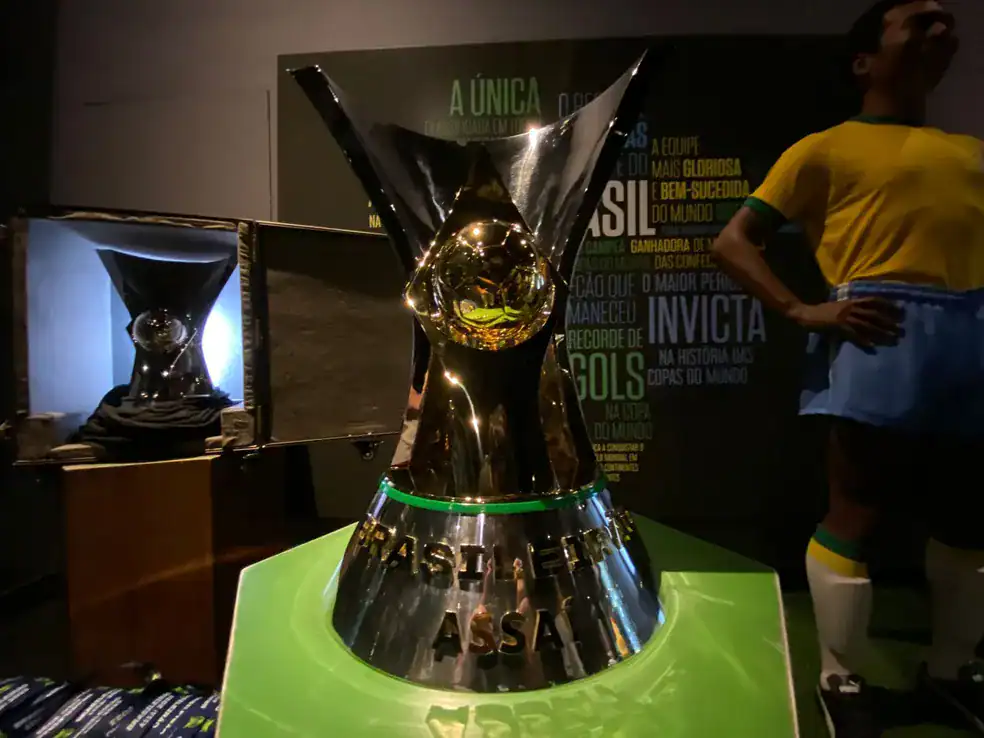
The 2026 Campeonato Brasileiro Série A — the competition’s 70th edition — began on January 28 and runs through December 2. Flamengo are the defending champions, having lifted their eighth title in 2025, but it is Palmeiras who have seized early control of the narrative with authority that borders on dominance.
After 11 rounds, Palmeiras sit six points clear of four clubs locked on 20 points — Flamengo, São Paulo, Fluminense, and Bahia — with a goal difference of +11 that underscores their quality margin. Their 21 goals scored is the highest in the division. World Football Index noted they have “started the Brasileiro in fantastic fashion” and represent the most credible title threat in the league.
| Pos | Team | P | W | D | L | GD | Pts |
|---|---|---|---|---|---|---|---|
| 1 | Palmeiras | 11 | 8 | 2 | 1 | +11 | 26 |
| 2 | Flamengo | 10 | 6 | 2 | 2 | +8 | 20 |
| 3 | São Paulo | 11 | 6 | 2 | 3 | +6 | 20 |
| 4 | Fluminense | 11 | 6 | 2 | 3 | +5 | 20 |
| 5 | Bahia | 10 | 6 | 2 | 2 | +5 | 20 |
| 6 | Athletico Paranaense | 11 | 6 | 1 | 4 | +4 | 19 |
Source: 2026 Campeonato Brasileiro Série A — Wikipedia / CBF. Standings after Round 11, April 12, 2026.
At the other end, Corinthians are in genuine danger. Eight consecutive league matches without a win left them just two points above the relegation zone heading into mid-April. Cruzeiro (17th, −7 GD) and the three newly promoted clubs — Remo, Chapecoense, and Mirassol — are all staring at a return to Série B. The top five finishers (plus Copa do Brasil champion/runner-up) will qualify for the 2027 Copa Libertadores under a tightened rule that reduces automatic continental berths from six to five — raising the stakes for every position in the top half of the table.
Copa Libertadores 2026: Six Brazilian Clubs, Two Very Different Stories
Six Brazilian clubs — Flamengo, Palmeiras, Fluminense, Corinthians, Cruzeiro, and Mirassol — entered the 2026 Copa Libertadores group stage following a draw in Luque, Paraguay on March 19. The final is scheduled for November 28 in Montevideo, Uruguay. Two contrasting storylines have emerged in the first two matchdays.
Flamengo and Corinthians: Perfect Records
Flamengo are the standout Brazilian performers on the continent, scoring 6 goals and conceding just 1 through two matchdays in Group A. Lucas Paquetá — signed from West Ham and already a fan favourite — scored in the matchday 2 win over Independiente Medellín. Corinthians, despite their domestic struggles, have been equally ruthless in Group E: 4 goals, 0 conceded, with Memphis Depay and Jesse Lingard part of a squad still finding its rhythm. As beIN Sports noted following the group draw, Brazilian clubs entered as the competition’s form nation after their 2025 Club World Cup dominance.
Fluminense and Mirassol: Contrasting Pressure
Fluminense are in early trouble in Group C — just 1 point from 2 games puts them at risk of dropping to the Copa Sudamericana. For the small-city São Paulo club Mirassol, however, the Libertadores represents a milestone moment: their first-ever continental campaign, sharing Group G with LDU Quito, Lanús, and Always Ready. Beyond those two groups, Cruzeiro sit mid-table in Group D alongside Boca Juniors after a split of results — a win over Barcelona (ECU) and a loss to Universidad Católica. In the Copa Sudamericana, Santos (featuring Neymar in Group D), Atlético Mineiro, São Paulo, Grêmio, and Botafogo also represent Brazil in continental competition.
The Coaching Carousel: Flamengo’s Shock Sacking and Corinthians’ Crisis
No managerial story in world football in 2026 has matched Flamengo’s treatment of Filipe Luís. On March 3, just hours after a crushing 8-0 semi-final win over Madureira — an 11-0 aggregate — the club dismissed their most successful recent coach. ESPN confirmed that Luís had won five trophies in 17 months — the Copa do Brasil (2024), Supercopa do Brasil, Campeonato Carioca, Copa Libertadores (2025), and Brasileirão (2025) — a trophy every 14 games. Football director José Boto delivered the news in a 30-second dressing room conversation after the press conference. As The Rio Times reported, Luís left the stadium without saying goodbye to his players; the decision had been made before kick-off.
ESPN’s deep-dive into the reasons identified several friction points: two final defeats early in 2026 (2-0 to Corinthians in the Supercopa do Brasil, 4-2 on aggregate to Lanús in the Recopa Sudamericana), rumours that Luís had spoken to Chelsea about their vacant head coach vacancy, and his public criticism of striker Pedro — which the board felt damaged Pedro’s transfer value. The replacement, Portuguese coach Leonardo Jardim, was appointed on March 5 and won his first trophy — the Campeonato Carioca — within three days. Through 10 matches, Jardim has posted 7 wins, 2 draws, and 1 loss, a 2.50 points-per-game average that suggests stability has returned.
| Club | Manager Out | Date | Manager In | Context |
|---|---|---|---|---|
| Flamengo | Filipe Luís | March 3, 2026 | Leonardo Jardim | Hours after 8-0 win; 5 trophies in 17 months |
| Corinthians | Dorival Júnior | April 5, 2026 | Fernando Diniz | 9 games without win; 16th in table |
| Botafogo | Davide Ancelotti | End of 2025 season | TBC | 15W-11D-7L stint; early Libertadores exit |
At Corinthians, the sequence ran as follows: former Brazil national team manager Dorival Júnior, who had won the 2025 Copa do Brasil and the 2026 Supercopa Rei at the club, was sacked on April 5 following a 1-0 home defeat to Internacional — his ninth game without a win in all competitions. Xinhua confirmed the dismissal was immediate, without a post-match press conference. Fernando Diniz — known for his free-flowing “Dinizismo” philosophy and a former interim Brazil national coach — was appointed two days later to try to keep the Timão in Série A.
Player Storylines: Neymar, Vinícius, and the World Cup Race
Neymar at Santos: Productive but Uncertain
Neymar returned to Santos in January 2025 on a free transfer after his injury-ravaged spell at Al Hilal, and his homecoming has delivered more than many expected. Through the 2026 Série A season (to April 12), he has started 5 matches, scoring 3 goals and adding 2 assists across 449 minutes — including a 9.0-rated performance (per FotMob) against Vasco on February 26, when he scored twice. On April 13, it was reported he reached a top speed of 32.6 km/h and covered 10.2 km against Atlético Mineiro — his best physical performance of the year.
2026
2026
Rating
km/h (Apr 13)
The World Cup question, however, hangs over every Santos fixture. Sporting News confirmed that Carlo Ancelotti dropped Neymar from his March 2026 squad — the final scheduled call-up before the World Cup roster is due. Ancelotti’s position is clear: “He has to be 100%… There are many talented players available, and I need to select those who are fully fit.” The final 26-man squad must be submitted before the end of May. Santos, meanwhile, are the subject of reported interest from Colombia’s Santo Domingo family, who are exploring a SAF purchase of the club valued at approximately R$2 billion.
Vinícius Júnior: Real Madrid’s Dilemma
The Brazilian forward has enjoyed a stunning return to form in 2026, scoring 12 goals and providing 4 assists in 20 games since January — including back-to-back braces against Manchester City and Atlético Madrid. Sports Illustrated reports he has publicly stated his desire to remain at the Bernabéu, calling it “the club of my dreams.” Yet Football Transfers reports Real Madrid will not improve their contract offer, fuelling Saudi Pro League speculation ahead of a potentially pivotal summer transfer window.
Money, Ownership, and the SAF Revolution
Brazilian football’s financial landscape has shifted dramatically since Law No. 14,193/2021 — the SAF law — allowed clubs to convert from non-profit associations to limited companies. FTI Consulting described it as opening “new avenues of growth through capital investment,” while international investors have moved quickly to exploit the opportunity.
2025 (record)
Revenue (ranked 31st)
Attendance 2026
Flamengo are the headline act. Their total revenue reached a record US$380 million in 2025 — driven in part by Club World Cup prize money — propelling them to 31st in the 2026 Deloitte Football Money League with €202.7 million in reported revenue. As Sportcal noted, they remain “the only team from outside of Europe” in that bracket — a statistic that encapsulates both their commercial power and the scale of the gap that remains. Financial analyst Kieran Maguire pointed out that 15 of the top 30 Money League clubs are from the Premier League alone.
The SAF model’s most dramatic proof of concept remains Botafogo. American investor John Textor’s R$400 million injection — securing a 90% stake — funded the recruitment that delivered the 2025 Brasileirão title and Copa Libertadores in the same season. However, an April 2026 audit flagged R$2.7 billion in liabilities and a 2025 operating loss — a reminder that trophies and balance sheets do not always move in the same direction. Textor has proposed a further US$50 million equity injection to stabilise the club’s finances. Cruzeiro, under 2002 World Cup winner Ronaldo Nazário’s ownership, and Vasco da Gama are further examples of the SAF template attracting external capital to clubs with historic brands but troubled finances.
Brazil at the 2026 World Cup: Ancelotti’s Meritocracy
Brazil qualified for the 2026 FIFA World Cup — co-hosted by the United States, Canada, and Mexico — finishing fifth in the CONMEBOL standings with 28 points from 18 games. The qualification campaign was rocky enough that Dorival Júnior was dismissed from the national role — a turbulent period ended by the appointment of Carlo Ancelotti in May 2025.
ESPN described the appointment of the five-time Champions League winner as “more than a strategic move — it’s also a statement to the world.” Ancelotti is the first foreign coach ever to lead Brazil at a World Cup. His philosophy is unambiguous: as Yahoo Sports reported, he told Brazilian president Lula directly that “he will not select anyone based solely on their reputation but on their performance, training, and readiness.” Brazil are drawn in Group C and open against Morocco on June 13.
The expected squad leans heavily on European-based talent: Vinícius Jr. (Real Madrid), Raphinha (Barcelona), Estêvão (Chelsea), Rodrygo, Endrick, and Gabriel Martinelli (Arsenal) lead the attacking options, with a midfield anchored by Bruno Guimarães (Newcastle) and Lucas Paquetá (Flamengo). Brazil-based players in contention include Danilo (Botafogo), Pedro (Flamengo), and Andreas Pereira (Palmeiras). FIFA.com confirmed that teenagers Rayan (Bournemouth) and Igor Thiago received first call-ups for the March window based on Premier League form, signalling Ancelotti’s willingness to look beyond established names.
State Championships, Attendances, and the Club World Cup Legacy
Paulistão and Carioca: Palmeiras and Flamengo Collect Silverware
Palmeiras extended their Campeonato Paulista dominance by lifting a record 27th state title — their fifth in seven editions — defeating Novorizontino 3-1 on aggregate in the final. Their seventh consecutive Paulista final appearance is a feat without modern precedent in São Paulo football. Flamengo completed an historic Carioca treble, beating Fluminense 5-4 on penalties in a Maracanã final attended by 62,985 fans — and doing so under a coach who had been in the job for three days. Goalkeeper Agustín Rossi saved two spot-kicks to secure Flamengo’s 40th Carioca title.
Club World Cup 2025: Brazil’s Finest Hour — and a Cautionary Note
At the 2025 FIFA Club World Cup in the United States, all four Brazilian entrants — Flamengo, Palmeiras, Botafogo, and Fluminense — topped their respective groups. Forbes called it “the standout performance” of the tournament’s group stage. Botafogo stunned PSG 1-0 in the groups; Fluminense reached the semi-finals before losing 2-0 to Chelsea. Chelsea ultimately won the tournament. The prize money generated — particularly for Flamengo — directly contributed to their Deloitte Money League revenue surge. ESPN noted the tournament also created tactical scrutiny: where Fluminense impressed, Flamengo and Palmeiras exited earlier than expected, and the fixture congestion contributed to early-2026 fatigue.
Attendance: The Flamengo Effect and the Structural Gap
Flamengo’s average home attendance in the 2026 Brasileirão stands at 55,237 per match — nearly three times the league average of approximately 19,972 recorded across the first 37 games of the season. The disparity illustrates a structural reality: Brazil’s top flight includes clubs like Santos (Vila Belmiro, 16,068 capacity) and Remo (Baenão, 13,792) who simply cannot generate comparable matchday revenues regardless of performance. The Maracanã’s 78,838 capacity gives Rio clubs a structural advantage that has no equivalent in São Paulo. Corinthians’ Neo Química Arena (47,252) remains the largest draw in the state despite the club’s on-field difficulties.
Related Coverage on Rio Times Online
- Brasileirão 2026: Palmeiras Lead as São Paulo Falls
- Corinthians Sack Dorival Júnior Amid Brasileirão 2026 Crisis
- Flamengo Fires Its Most Successful Coach Hours After an 8-0 Win
- Palmeiras Win São Paulo State Title in the Rain
- Flamengo Is the Only Non-European in Deloitte’s Top-30 Football Earners
- Neymar’s Santos Dumped from Paulistão by Last-Gasp Header
This article is part of The Rio Times’ guide series, offering in-depth analysis for investors, expats, and analysts tracking Latin America. This article does not constitute investment advice.
More: Brazil news in English, every day from The Rio Times.
This article was produced by The Rio Times’ automated newsroom system. How we use AI · Report an error · Editorial responsibility: Matthias Camenzind, Editor-in-Chief