

In Burkina Faso, a wind of change is blowing, carrying the hopes of its people towards a horizon of reform and renewal.
President Ibrahim Traoré’s passionate speech on July 11 centers on a powerful allegory—the triangle of global power.
Watch the video, now translated into English for your convenience. We believe it offers valuable insight into the man and his perspectives.
Traoré, who seized power in Burkina Faso in 2022, is noted for his anti-imperialist views and policy reforms.
He describes the world as a triangle with three corners: the empire of evil, the empire of slaves, and, opposing them, the empire of good.
This is not just a metaphor but a narrative battlefield where Burkina Faso is redefining its identity and stance against historical imperialist forces.
Traoré explains that the “empire of evil” and “empire of slaves” represent how certain world powers view developing nations and their roles in the global order.
The “empire of evil” labels nations opposing Western dominance, while the “empire of slaves” refers to resource-rich, yet undervalued regions like Africa and South America.
Through his speech, Traoré rejects these demeaning roles and asserts Burkina Faso’s place as a nation of integrity and resilience, striving to break free from these imposed narratives.
With the stage set by this triangle allegory, Traoré then unveils his government’s ambitious plans.
He targets systemic corruption, promising a judicial overhaul to ensure equality before the law—a fundamental reshaping aimed at dismantling the “empire of slaves” mentality.
Justice, according to Traoré, should serve all citizens equally, without bias towards the rich or powerful.
Economically, he envisions a self-sufficient Burkina Faso, minimizing reliance on foreign goods and interests that have long dictated local markets.
He aims to revitalize local industries and agriculture to protect Burkina Faso from economic dependency and break the “empire of slaves” narrative.
Beyond the Triangle: Traoré’s Challenge to Western Perceptions of Burkina Faso
Education reforms speak directly to empowering the youth, equipping them with skills not just to participate in but to innovate and lead their nation’s future.
This strategic move is designed to counteract the passive role assigned to them by the “empire of good,” which often portrays itself as the sole bearer of knowledge and progress.
As Traoré’s speech unfolds, the triangle allegory serves as a continuous reference point, a reminder of the global forces at play and Burkina Faso’s determination to redefine its position.
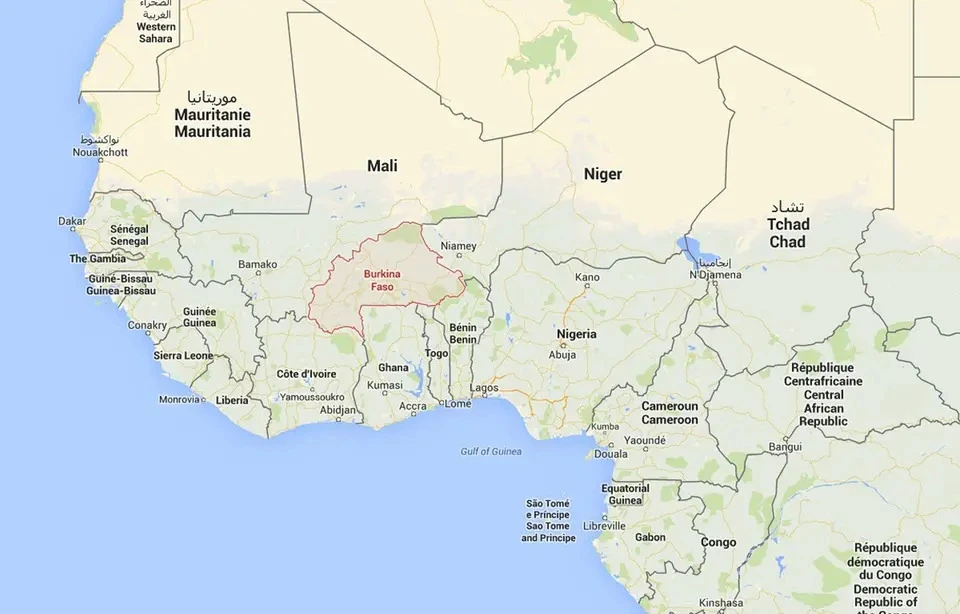
This is a narrative of empowerment, a call to the people of Burkina Faso to rise, aware and united against external definitions and constraints.
As the assembly disperses, the energy of renewal is palpable. The path forward is fraught with challenges, but underpinned by a clear vision: Burkina Faso is no longer content to be a pawn in a game played by global powers.
It seeks a new identity, one of self-determination, justice, and dignity—a true echo of revolution resonating across the Sahel.
This pivotal moment is more than national reform; it is a beacon for Africa and other developing regions striving for autonomy and respect in a complex international arena.
Burkina Faso has drawn the triangle of perception and is now redrawing its angles to forge a future with its own hands.