Lula National TV Address Skips Two Major Defeats Hours After Veto Override
Key Facts
— —Lula’s national TV address on April 30 announced a new “Desenrola Brasil” debt relief program launching Monday, May 4, with up to 90% discounts and 1.99% monthly interest cap.
— —Workers can withdraw up to 20% of their FGTS severance fund balance to clear debts, and enrollees will be blocked from online betting platforms for 12 months.
— —The address ignored both the Messias Supreme Court rejection and the Dosimetria veto override, the two biggest political stories of the week.
The Lula national TV address was a political calculation as much as a policy launch — the silence about two devastating Congressional defeats spoke as loudly as anything the president said.
President Luiz Inácio Lula da Silva delivered his Lula national TV address on Thursday at 20h37, hours after his Workers’ Party absorbed a second crushing legislative defeat in 24 hours. He talked about debt relief, the end of Brazil’s six-day work schedule, and the price of cooking gas. He did not mention either Congress’s rejection of his Supreme Court nominee or its override of his veto on the so-called Dosimetria Law.
The Rio Times, the Latin American financial news outlet, reports that the address marked Lula’s second national broadcast of 2026 and a clear pivot to direct populist messaging ahead of October’s general election. The omissions were as deliberate as the pitches.
What the Lula National TV Address Promised
The centerpiece announcement was the Novo Desenrola Brasil, the second iteration of a 2023 program that previously renegotiated R$53 billion in household debt. The new version offers monthly interest capped at 1.99%, debt discounts ranging from 30% to 90%, and access to up to 20% of the worker’s FGTS severance balance. The program covers credit card balances, overdraft, revolving debt, personal loans, and student debt under FIES.
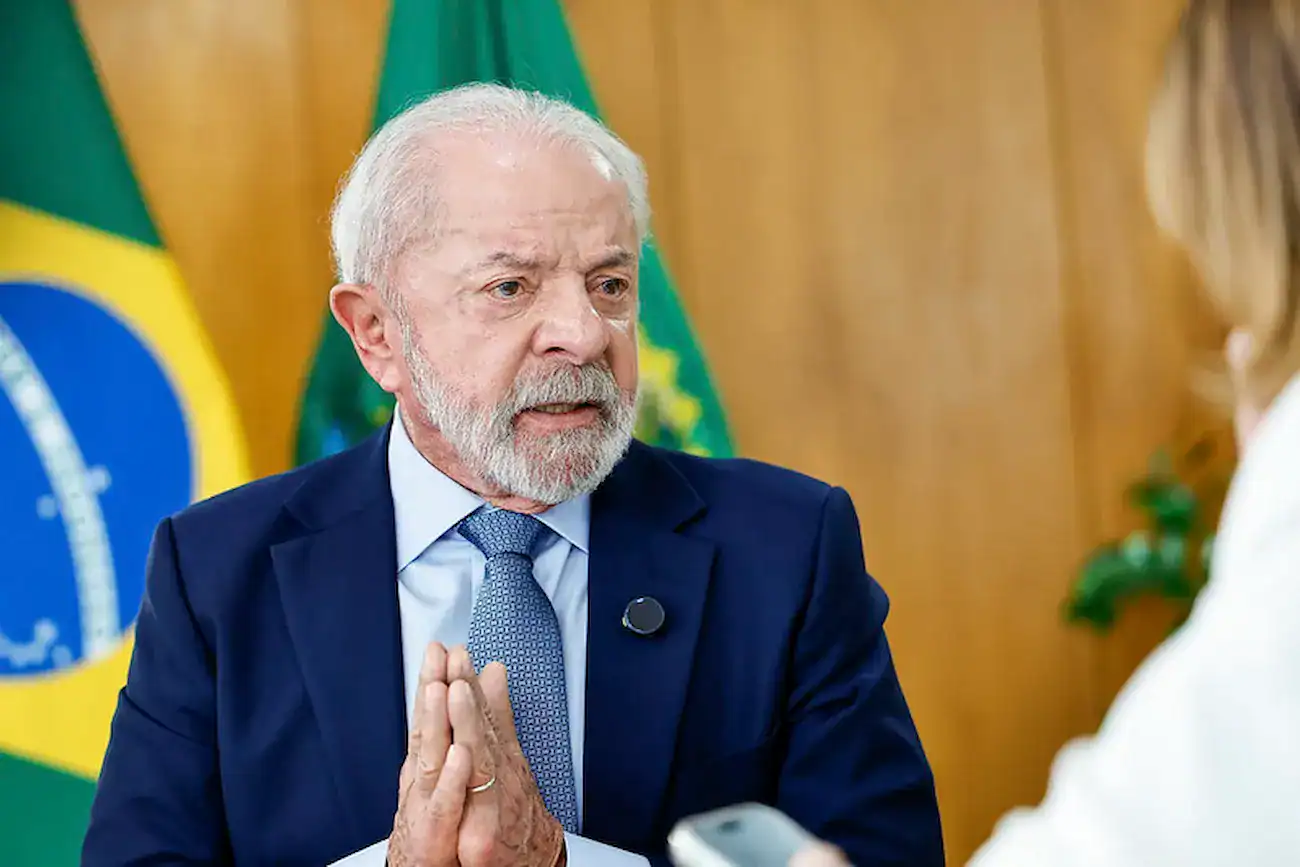
Lula coupled the relief with a populist trigger: anyone who enrolls will be blocked from all online sports betting platforms for one year. He framed the betting industry as a destroyer of household budgets, particularly for working women whose partners gamble away wages. The presidential team also reaffirmed the push to scrap Brazil’s six-day-on, one-day-off work schedule and reduce the standard week from 44 hours to 40.
The Two Defeats He Did Not Address
The Senate rejected Lula’s Supreme Court nominee Jorge Messias on Wednesday evening by 42 to 34, the first such rejection in 132 years. Less than 24 hours later, Congress overrode his veto of the Dosimetria Law, the legislation that could shorten former president Jair Bolsonaro’s 27-year coup sentence by as much as five years. Both votes were front-page news across Brazilian media on Thursday.
Yet Lula’s prepared text did not name either event. The closest he came was a generic reference to systemic resistance: “If it depended on the system, slavery would not have been abolished in Brazil.” His government leader in the Senate, Jaques Wagner, used social media earlier in the day to argue that the constitutional pact had been the real loser of the Messias vote — but Lula himself stayed clear of the legislative arena entirely.
Why the Lula National TV Address Avoided the Bad News
Brazilian political analysts read the silence as deliberate triangulation. Acknowledging the defeats on national television would have amplified them; ignoring them allowed the government to control its own news cycle for one evening. The Workers’ Day calendar gave the Planalto a structural advantage — May 1 is a holiday, ensuring the speech reaches living rooms without immediate competing headlines.
The omission also speaks to the limits of what the Lula national TV address could have done. The Messias rejection cannot be reversed without a new nomination, and Lula has signaled he will pick again in coming weeks. The Dosimetria override is now headed for promulgation either by Lula within 48 hours or by the Senate president if Lula refuses, leaving no political win available in those files — only votes to be lost by reopening them.
The Election Calendar Behind the Strategy
The pitch on debt relief and shorter work weeks targets the constituency Lula needs most — formal-sector workers, women, and lower-middle-class families squeezed by an inflation trajectory that has pushed the IPCA forecast above the central bank’s 4.5% ceiling. Recent polling shows Lula in a statistical tie with Senator Flávio Bolsonaro for October’s first round, and his approval has slipped under sustained pressure from the Iran war oil shock and a 14.50% policy rate that is only just beginning to fall.
The address also coincided with the entry into force of the Mercosur-EU trade agreement on May 1, a foreign-policy win the government has been trying to monetize politically. Lula did not mention the trade deal in the address either, choosing instead to keep the message focused on domestic kitchen-table issues. The combination of selective amnesia and targeted populism is the playbook for the next six months.
The risk for Lula is that voters who watched the speech without the political context simply did not learn that anything bad had happened. The risk for opponents is that they will spend the next week explaining what Lula left out, rather than what they themselves stand for. That asymmetry, in the early months of a campaign, tends to favor the incumbent.
More: Brazil news in English, every day from The Rio Times.
This article was produced by The Rio Times’ automated newsroom system. How we use AI · Report an error
Read More from The Rio Times