Lula’s New Congress Chief Faces Escala 6×1 Test
Key Facts
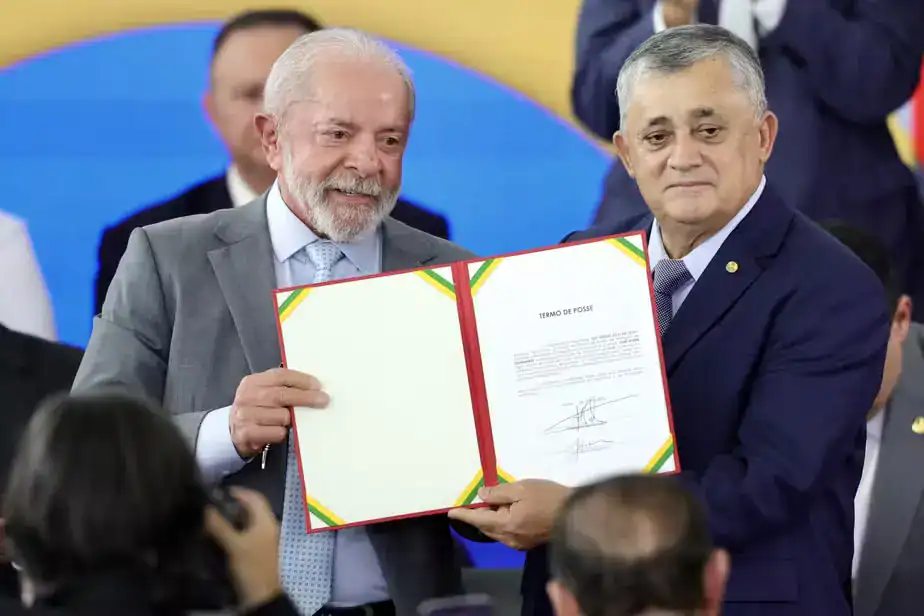
— — Deputy José Guimarães (PT-CE) was sworn in Tuesday as minister of the Secretaria de Relações Institucionais, replacing Gleisi Hoffmann, who left to run for the Senate in Paraná. Paulo Pimenta was named the new government leader in the Câmara.
— — Guimarães’s immediate priority is steering Lula’s escala 6×1 bill through Congress—a proposal to reduce the standard work week to five days and 40 hours without pay cuts, which the Planalto has adopted as its central campaign promise for October.
— — The bill faces resistance from business groups and governors, with Minas Gerais Governor Zema calling it “PT populism.” Câmara President Hugo Motta has signaled caution, and Guimarães caused friction before taking office by prematurely signaling a strategy change.
Lula’s new political operator took office on Tuesday with a mandate to pass the most popular and most opposed labor reform in Brazilian politics. The clock runs until October.
José Guimarães took the oath as Lula’s new minister of institutional relations on Tuesday afternoon at the Planalto, inheriting the government’s congressional negotiating apparatus six months before an election that will determine whether the president wins a fourth term. The Rio Times, the Latin American financial news outlet, reports that Guimarães replaces Gleisi Hoffmann, who left the cabinet on April 4 to pursue a Senate seat in Paraná under the electoral desincompatibilização deadline, and that his first assignment is the escala 6×1 bill—a proposal to end the six-day work week that Lula has made the centerpiece of his re-election platform.
The José Guimarães Escala 6×1 Challenge
The bill, authored by deputies Reginaldo Lopes (PT-MG) and Erika Hilton (PSOL-SP), would reduce the standard work week to 40 hours across five days without salary reductions. Guimarães called it “one of the most modern measures with great impact on the Brazilian economy” and said it “is not a partisan question but concerns the lives of Brazilians.” The Planalto plans to send it to Congress as a projeto de lei with urgency status, meaning it would jump the legislative queue.
The resistance is already organized. Minas Gerais Governor Romeu Zema called the proposal “PT populism,” and business associations have warned that mandating a shorter week without flexibility would raise labor costs across sectors still absorbing the impact of a 14.75% Selic rate. Câmara President Hugo Motta has been cautious, and a miscommunication last week—when Guimarães prematurely told Motta the government would drop the urgency request—forced the Planalto to publicly reaffirm its original strategy.
The Broader Reshuffle
Guimarães’s appointment triggered a chain of moves. Paulo Pimenta (PT-RS), former Secom minister and coordinator of the Rio Grande do Sul reconstruction effort, was named the new government leader in the Câmara. Guimarães himself had been serving as Câmara leader and had planned to run for the Senate in Ceará—a candidacy now abandoned, requiring the PT to restructure its slate in the state.
Beyond the 6×1 bill, Guimarães inherits three additional high-stakes legislative files: the PEC da Segurança Pública, the regulation of app-based work, and the Senate confirmation of Jorge Messias as the next Supreme Court justice, with the sabatina scheduled for April 19. In his swearing-in speech, he pledged “permanent dialogue with Congress” and spoke of the need to “defeat fascism”—a framing that signals the government views the October election as existential.
The Election-Year Calculus
The escala 6×1 is popular with voters and toxic with employers—the precise combination that makes it potent campaign material and difficult legislation. Lula needs it to pass, or at least advance far enough to claim credit, before the election shuts down the congressional calendar. Guimarães’s track record as a veteran PT negotiator and his good relationship with Motta, who publicly praised him as having “excellent relations even with the opposition,” suggest the Planalto believes the bill can be moved—but the tight polling against Flávio Bolsonaro means there is no margin for a legislative defeat on the government’s flagship promise.
Related Coverage: Datafolha: Flávio 46% vs Lula 45% in First Numerical Reversal • Brazil Inflation 2026 Guide
More: Brazil news in English, every day from The Rio Times.
This article was produced by The Rio Times’ automated newsroom system. How we use AI · Report an error · Editorial responsibility: Matthias Camenzind, Editor-in-Chief