JBS (B3: JBSS32 / NYSE: JBS), the world’s largest meat processor, reported Q1 2026 net income of US$221 million on Tuesday May 12, down 55.8 percent from US$513 million in Q1 2025, with revenue rising 11 percent year-on-year to a record-high US$21.6 billion for a first quarter, according to the company’s earnings release.
Adjusted EBITDA fell 26 percent year-on-year to US$1.13 billion, with the consolidated EBITDA margin compressing to 5.2 percent. Return on equity for the quarter was 22.1 percent, per the filing.
The headline drag was JBS Beef North America, the largest single business unit by revenue. The segment posted negative EBITDA of US$230 million on revenue of US$7.167 billion — a margin of -3.2 percent versus the slightly negative print delivered a year earlier — as the US cattle cycle reached “one of its most acute phases,” per CEO Gilberto Tomazoni.
Brazilian operations were the offset. JBS Brazil posted record first-quarter revenue of US$3.78 billion with a 4.4 percent EBITDA margin, and Seara — the processed-meat, pork and poultry unit — reached a 15.5 percent EBITDA margin on US$2.379 billion in revenue, validating the multi-protein, multi-geography strategy the company has built around its US beef exposure.
Key Points
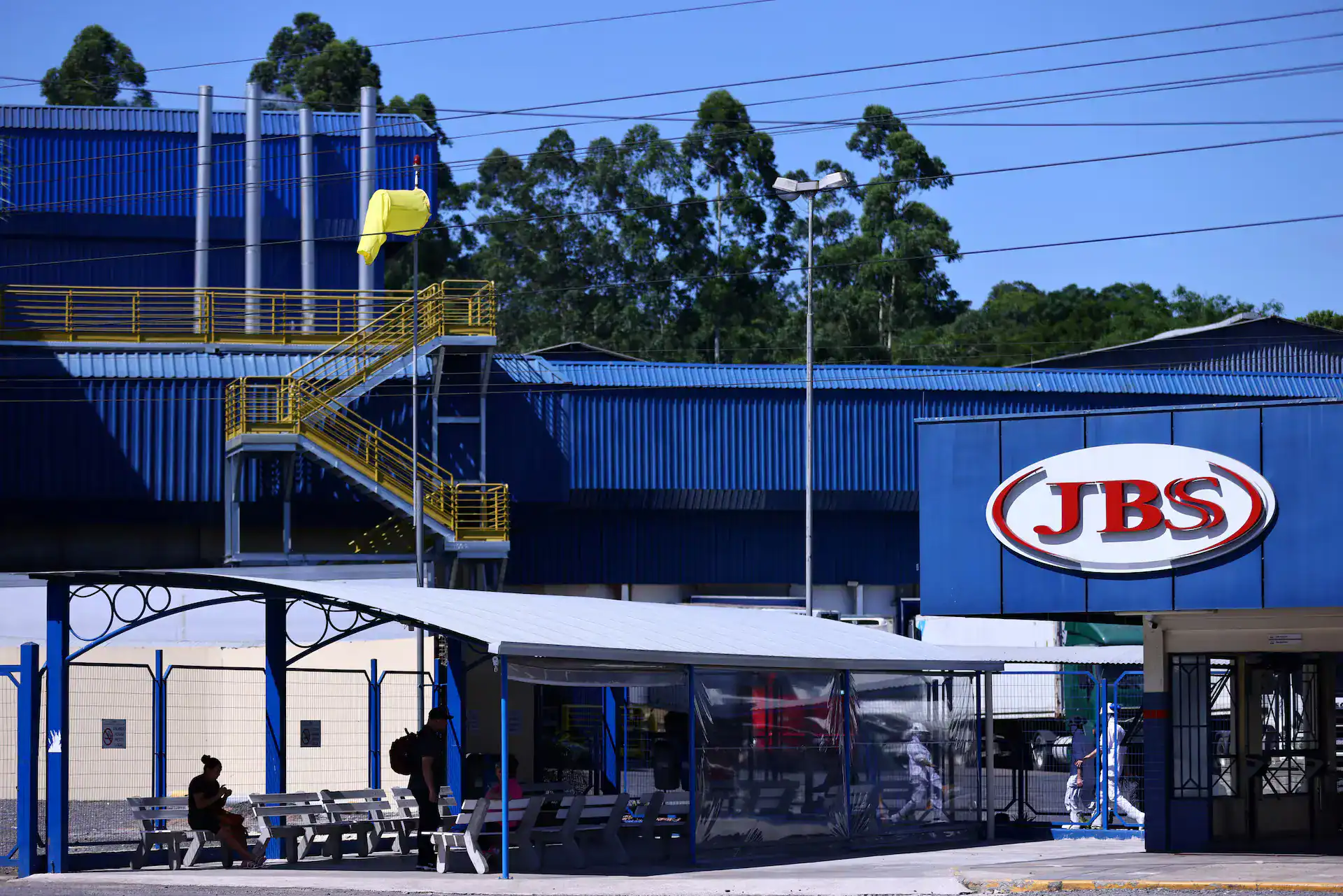
What JBS Reported in Q1 2026
JBS is the world’s largest meat processor with operations in more than 20 countries and over 282,000 employees. The company completed its New York Stock Exchange listing in 2025 and now trades under JBS on the NYSE alongside JBSS32 (BDR) on the B3, with a portfolio of brands including Friboi, Seara, Swift, Pilgrim’s Pride, Moy Park, Primo and Just Bare.
The Q1 2026 print represents the eighth consecutive quarter in which the diversified-platform thesis has been tested by the US cattle cycle and the eighth in which the rest of the portfolio has partly compensated. Revenue grew 11 percent year-on-year to US$21.6 billion — a record for any first quarter — while net income fell 55.8 percent to US$221 million versus US$513 million in Q1 2025.
Adjusted EBITDA was US$1.13 billion, down 26 percent year-on-year. The consolidated EBITDA margin compressed to 5.2 percent from 7.8 percent a year earlier. Return on equity held at 22.1 percent, supported by the balance-sheet repair and dividend payouts that have followed the 2025 record annual result.
JBS Beef North America posted revenue of US$7.167 billion in Q1 2026 with EBITDA of negative US$230 million and a margin of -3.2 percent. The unit faced what CEO Gilberto Tomazoni described as “a perfect storm” — lower cattle availability amid one of the most acute phases of the cycle, combined with elevated cattle procurement costs.
The company is responding with structural moves. JBS advanced organizational and operational adjustments across the US beef platform during the quarter, focusing on simplifying the structure and capturing synergies. Management has flagged repeatedly that US cattle supply conditions are unlikely to materially improve through 2026, as herd rebuilding takes years.
Pilgrim’s Pride, the publicly traded US poultry subsidiary, generated US$4.529 billion in revenue with a 9.9 percent EBITDA margin. The unit was affected by extreme winter weather and used the seasonal slowdown to carry out planned maintenance shutdowns at three facilities, with operational improvements designed to support volumes through later quarters.
JBS USA Pork delivered record first-quarter revenue of US$2.032 billion with a 13.5 percent EBITDA margin, reflecting strong domestic demand for affordable protein and the consumer trade-down from beef to pork that has structurally lifted US pork margins through the cattle cycle.
JBS Brazil posted record first-quarter revenue of US$3.78 billion with a 4.4 percent EBITDA margin. Growth came from strong volumes and geographic diversification of export destinations. The Cepea-Esalq live cattle price averaged R$338 per arroba in the quarter, up 6 percent year-on-year, compressing margins despite the revenue strength — the inverse of the US dynamic, where cattle costs are also high but consumers are not absorbing them.
Seara reached a 15.5 percent EBITDA margin on US$2.379 billion in revenue, with growth in both export and domestic channels. The unit continued investing in brand fundamentals and value-added portfolio expansion. The Iran conflict pressured several key export markets but did not derail the segment’s growth pace, per the company.
JBS Australia reported revenue of US$2.145 billion with a 6.2 percent EBITDA margin, supported by volume growth in domestic and export channels and offsetting cattle cost increases of nearly 30 percent over the prior twelve months. The depreciation of the Australian dollar against the US dollar mechanically compressed the conversion of segment results into reporting currency.
Live Company IntelligenceJBS N.V. — the full investor dossier
Wall Street view
Valuation & profitability
Price & risk
$10.6152-wk high
$17.27
Revenue trend · 6y
Ownership
Dividend
Why JBS Q1 Matters
The 55.8 percent profit drop sounds catastrophic but masks a structural success. JBS Beef North America accounts for roughly one third of consolidated revenue, and at -3.2 percent margin the segment was burning approximately US$230 million in operating cash this quarter. The fact that the consolidated company still earned US$221 million is the multi-protein hedge working as designed.
The Q1 2025 baseline for comparison was unusual. As the Rio Times noted at the time, Q1 2025 delivered a 77.6 percent year-on-year profit surge to US$513 million on poultry strength and a favourable real, with JBS Beef North America at -1.8 percent margin. The Q1 2026 deterioration in the US beef segment to -3.2 percent — versus an effectively negative print a year ago, depending on the reference base — is the core delta.
Two structural factors define the US beef pressure. First, the cattle cycle: the US herd is at its lowest in roughly three quarters of a century, and herd rebuilding takes years. Cattle availability is constrained and procurement costs are elevated.
Second, consumer dynamics: US households, squeezed by sticky inflation and a softer labour market, are trading down from beef to pork and poultry. That trade-down has driven JBS USA Pork to record first-quarter revenue and a 13.5 percent EBITDA margin, but the lost beef demand is not coming back quickly. Both effects are likely to persist through 2026.
The Brazilian and global story is the opposite. Seara’s 15.5 percent margin is roughly in line with its 16.9 percent full-year 2025 print and continues the trajectory established when grain costs normalised and operational adjustments closed gaps that had hurt the segment in 2023.
JBS Brazil’s record first-quarter revenue at US$3.78 billion reflects strong international demand for Brazilian beef, particularly from China, the Middle East and other Asian markets. The 4.4 percent EBITDA margin is below historical norms because Brazilian cattle costs have risen with global demand, but the absolute revenue line proves the export channel is delivering.
The same Hormuz-driven disruption that has lifted Brent crude and pressured Brazilian airline margins is also affecting Seara’s key export markets, particularly the broader Middle East corridor. Seara maintained growth despite the headwind, but the operating environment for global protein exports remains volatile.
Capital structure is the other dimension management is emphasising. Leverage closed at 2.77 times, comfortably within the long-term target range, and the average debt maturity has been extended to 15.6 years at an attractive 5.7 percent average cost. JBS reports no significant maturities until 2031.
CapEx of US$2.4 billion in the quarter was 20 percent higher than Q1 2025, signalling that management is investing through the cycle rather than retrenching. The strategy mirrors the playbook that delivered JBS’s record US$86 billion full-year 2025 revenue and US$2 billion in profit — diversification compounding while individual segments cycle.
For investors, the read is binary. If the US cattle cycle finds a floor in 2026 — even at -3.0 percent rather than -3.2 percent margin — and the rest of the portfolio continues delivering double-digit margins where structurally possible (Seara, US Pork), the consolidated profit recovers materially.
If the US beef segment deteriorates further or if a recession compresses US protein demand broadly, the diversified hedge gets stress-tested again. Management’s signal so far is that no improvement is expected in US beef supply through year-end, meaning the strength of Brazil, Seara, USA Pork and Pilgrim’s Pride needs to compound at the current pace to keep consolidated earnings in positive territory.
JBS Q1 2026 Consolidated Snapshot
| Indicator | Q1 2026 | Chg YoY |
|---|---|---|
| Net Income | US$221M | -55.8% |
| Net Revenue | US$21.6B (Q1 record) | +11% |
| Adjusted EBITDA | Margin | US$1.13B | 5.2% | -26% |
| Return on Equity | 22.1% | Supported by buyback |
| Leverage (net debt / EBITDA) | 2.77x | Within target |
| CapEx | US$2.4B | +20% (vs 2025) |
| Avg debt maturity | cost | 15.6 yrs | 5.7% | No mat. until 2031 |
Segment Performance
| Segment | Revenue | EBITDA Margin |
|---|---|---|
| JBS Beef North America | US$7.167B | -3.2% (-US$230M) |
| Pilgrim’s Pride | US$4.529B | 9.9% |
| JBS Brazil | US$3.780B (Q1 record) | 4.4% |
| Seara | US$2.379B | 15.5% |
| JBS Australia | US$2.145B | 6.2% |
| JBS USA Pork | US$2.032B (Q1 record) | 13.5% |
What Happens Next for JBS
US cattle cycle floor: Tomazoni has signalled no material improvement in US beef supply through 2026. The segment likely stays in negative or near-zero margin territory through year-end. The market is watching for whether -3.2 percent is the trough or whether further deterioration is possible.
Seara momentum: The 15.5 percent margin is close to the full-year 2025 level of 16.9 percent and well above the 11.6 percent margin Seara delivered in Q1 2024 before the operational reset took hold. Continued double-digit margins here are essential to consolidated earnings.
Pilgrim’s Pride normalisation: Q1 Pilgrim’s was depressed by winter weather and planned maintenance at three facilities. Q2 should see a step-up as the modernised production lines come back online and feed in to growth with key customers.
Q2 Iran corridor: The Hormuz-driven disruption that has dominated cross-asset narratives is also pressuring some of Seara’s export markets. Watch for any production or pricing impact in the Middle East corridor in Q2.
Capital return: JBS approved a US$1 per share dividend with the FY2025 results, paid June 17. Capital allocation through 2026 will balance the elevated capex programme (US$2.4B in Q1 alone) against shareholder returns and continued deleveraging within the 2.77x target band.
More: Brazil news in English, every day from The Rio Times.
Frequently Asked Questions
How much did JBS earn in Q1 2026?
JBS reported net income of US$221 million in Q1 2026, down 55.8 percent from US$513 million in Q1 2025. Revenue rose 11 percent year-on-year to US$21.6 billion — a record for any first quarter in the company’s history.
Adjusted EBITDA was US$1.13 billion, down 26 percent year-on-year, with the consolidated EBITDA margin compressing to 5.2 percent from 7.8 percent. Return on equity for the quarter was 22.1 percent.
Why did JBS Beef North America post negative margins?
The US beef cycle is at one of its most acute phases. The US cattle herd is at its lowest in roughly three-quarters of a century, which has compressed availability and lifted procurement costs simultaneously. JBS Beef North America posted EBITDA of negative US$230 million on revenue of US$7.167 billion, a margin of -3.2 percent.
CEO Gilberto Tomazoni described the situation as “a perfect storm” and said US cattle supply conditions are unlikely to materially improve through 2026, as herd rebuilding takes years. The segment accounts for roughly one third of JBS’s total revenue.
How did Seara and JBS Brazil offset the US beef drag?
Seara posted a 15.5 percent EBITDA margin on US$2.379 billion in revenue, with strong execution in both export and domestic channels despite Middle East market disruption tied to the Iran conflict. The margin is close to the 16.9 percent full-year 2025 print and well above the levels delivered in 2023.
JBS Brazil delivered record first-quarter revenue of US$3.78 billion with a 4.4 percent EBITDA margin, driven by strong volumes and diversified export destinations. JBS USA Pork posted record Q1 revenue at US$2.032 billion with a 13.5 percent margin, benefiting from consumer trade-down from beef to pork.
What is JBS’s leverage and debt position?
Dollar-denominated leverage closed Q1 2026 at 2.77 times net debt to EBITDA, within the company’s long-term target range. The average debt maturity has been extended to 15.6 years at an attractive 5.7 percent average cost following the 2025 liability management exercise.
No significant maturities are expected until 2031. CapEx in Q1 2026 was US$2.4 billion, up 20 percent from the same period in 2025, signalling that management is investing through the cycle rather than retrenching. CFO Guilherme Cavalcanti emphasised this disciplined capital allocation framework provides security and liquidity to navigate volatility.
Updated: 2026-05-13T07:30:00-03:00 by Rio Times Editorial Desk
This article was produced by The Rio Times’ automated newsroom system. How we use AI · Report an error · Editorial responsibility: Matthias Camenzind, Editor-in-Chief
LatAm Markets: Live Signals → — real-time movers, turnover leaders and FX across Latin America.
Read More from The Rio Times