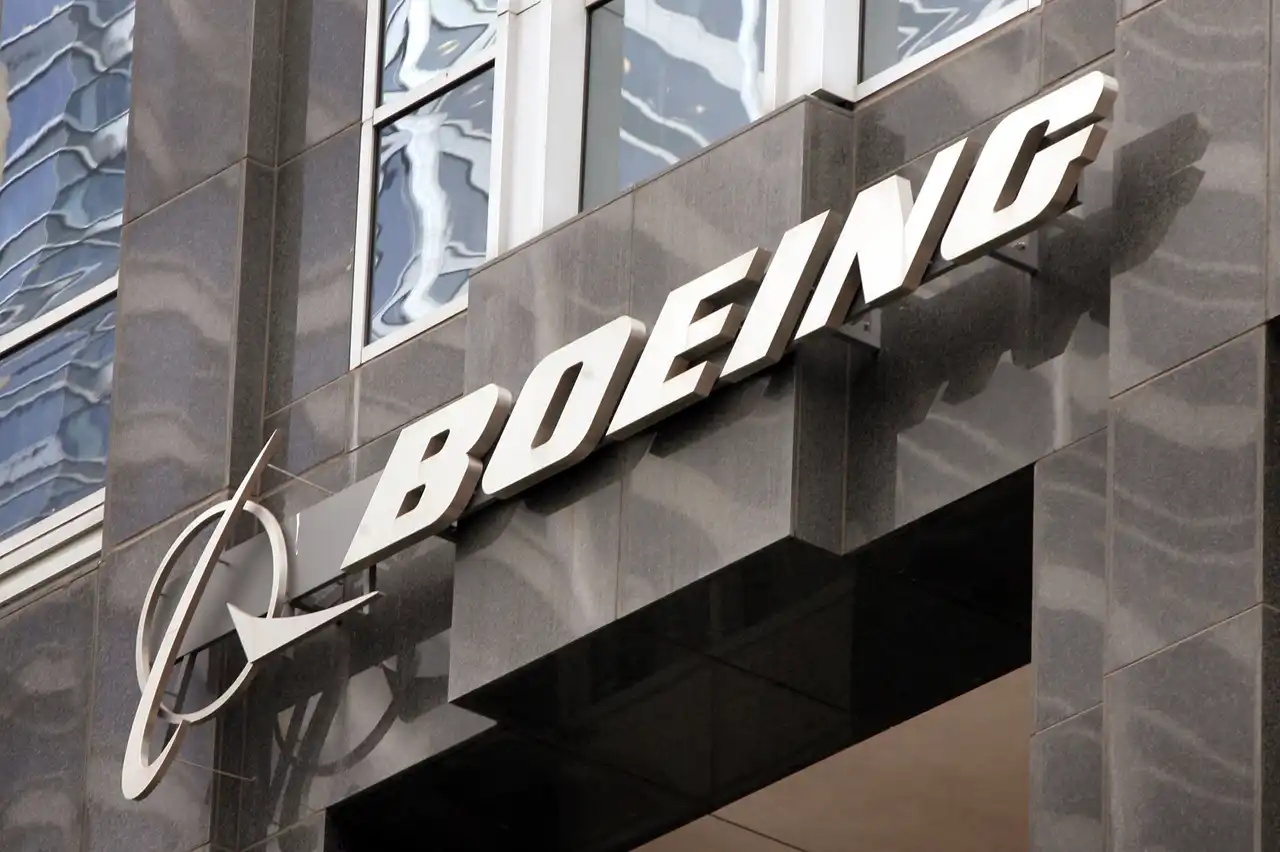
In a new development, Boeing, the aerospace giant, experienced a notable $12.1 billion loss in market value in a single day.
The company’s market valuation plummeted from $150.6 billion to $138.5 billion by the close of trading on Monday, January 8, 2024.
This sharp decline was a direct response to the U.S. aviation agency’s suspension of the Boeing 737 MAX 9 operations, triggered by a recent incident involving an Alaska Airlines flight.
Boeing’s shares took a significant hit on the New York Stock Exchange, dropping 8% to $229 per share, down from $249.
The sudden decrease in stock value reflects investors’ shaken confidence following the grounding of the 737 MAX 9 model, which was mandated after a critical in-flight incident.
During an Alaska Airlines flight, an explosion caused a side door to eject, depressurizing the aircraft.
This event occurred at approximately 16,000 feet, just ten minutes after takeoff, and was captured in a video showing the interior damage.
U.S. authorities immediately launched an investigation into the incident.
Alaska Airlines confirmed that despite the mid-air emergency, the flight managed to return safely to Portland with all 171 passengers and six crew members unharmed.
Boeing’s 737 MAX series, known for its fuel efficiency and increased seating capacity, has been at the center of controversy.
The series includes several models – MAX 7, MAX 8, MAX 9, and MAX 10 – each designed to accommodate varying passenger numbers.
Safety concerns
However, the MAX 8 variant has been particularly scrutinized due to safety concerns, highlighted by two fatal crashes in 2018 and 2019, which collectively claimed 346 lives.
These incidents led to a global grounding of the aircraft and an investigation that revealed critical design flaws and regulatory failures.
The 2020 Congressional report attributed these tragedies to Boeing’s competitive pressure, a culture of concealment, and inadequate FAA oversight.
Boeing’s market challenges highlight the complex interplay between corporate practices, regulatory oversight, and public trust in aviation safety.
As Boeing navigates through this turbulence, the aerospace industry is reminded of the importance of safety, transparency, and accountability.
This article was produced by The Rio Times’ automated newsroom system. How we use AI · Report an error · Editorial responsibility: Matthias Camenzind, Editor-in-Chief